


The CHARGEO Story
Our founders and our history, year by year
Who founded CHARGEO?
CHARGEO was founded in 2021 by Terrence Fumba and Thabani Mngadi. We registered the company on 23 March 2021. Terrence is our CEO and Thabani heads production. The two founders hold the house in equal shares. We are a luxury fashion house, born in South Africa.
The name comes from Thabani’s own nickname. His father, Mr Mngadi Senior, drove the first turbocharged taxi in the neighbourhood and named his son Turbo Charge. The township made it Chargeo.
This page tells our story year by year, with the photographs we took at the time. Some are rough. We kept them because they show where we started.
Written by Terrence Fumba, CEO of CHARGEO.
Our history at a glance
| Year | What happened |
|---|---|
| 1984 | Mr Mngadi Senior, Thabani’s father, makes his first pair of shoes |
| 1985 | Mr Mngadi Senior begins an apprenticeship under the shoemaker Trevor Goldstone |
| 2007 | Mr Mngadi Senior’s stand is voted one of the best at a small business fair of 230 exhibitors |
| 2020 | Terrence and Thabani meet again, years after school |
| 2021 | Terrence and Thabani register CHARGEO on 23 March |
| 2022 | The Innovation Hub names CHARGEO third prize winner of GAP GREEN 2021 |
| 2022 | We run a four-day leather training for eThekwini Municipality |
| 2022 | The CHARGEO trademark is registered in October |
| 2022 | Our first professional photo shoot, in Durban, in January |
| 2023 | The black and white hide backpack is photographed at the marina; the first Zulu Treasure pieces |
| 2024 | We apply to the Technology Innovation Agency with our Waste to Fashion process |
| 2025 | The Waste to Fashion project begins under the Grassroots Innovation Programme |
| 2025 | A five-year plan sets CHARGEO on its course as a luxury house |
| Today | Backpacks, belts and shoes made to order, and corporate commissions for the Durban University of Technology and SEDFA |
Chapter 1: Before CHARGEO (1984 to 2020)
The family trade
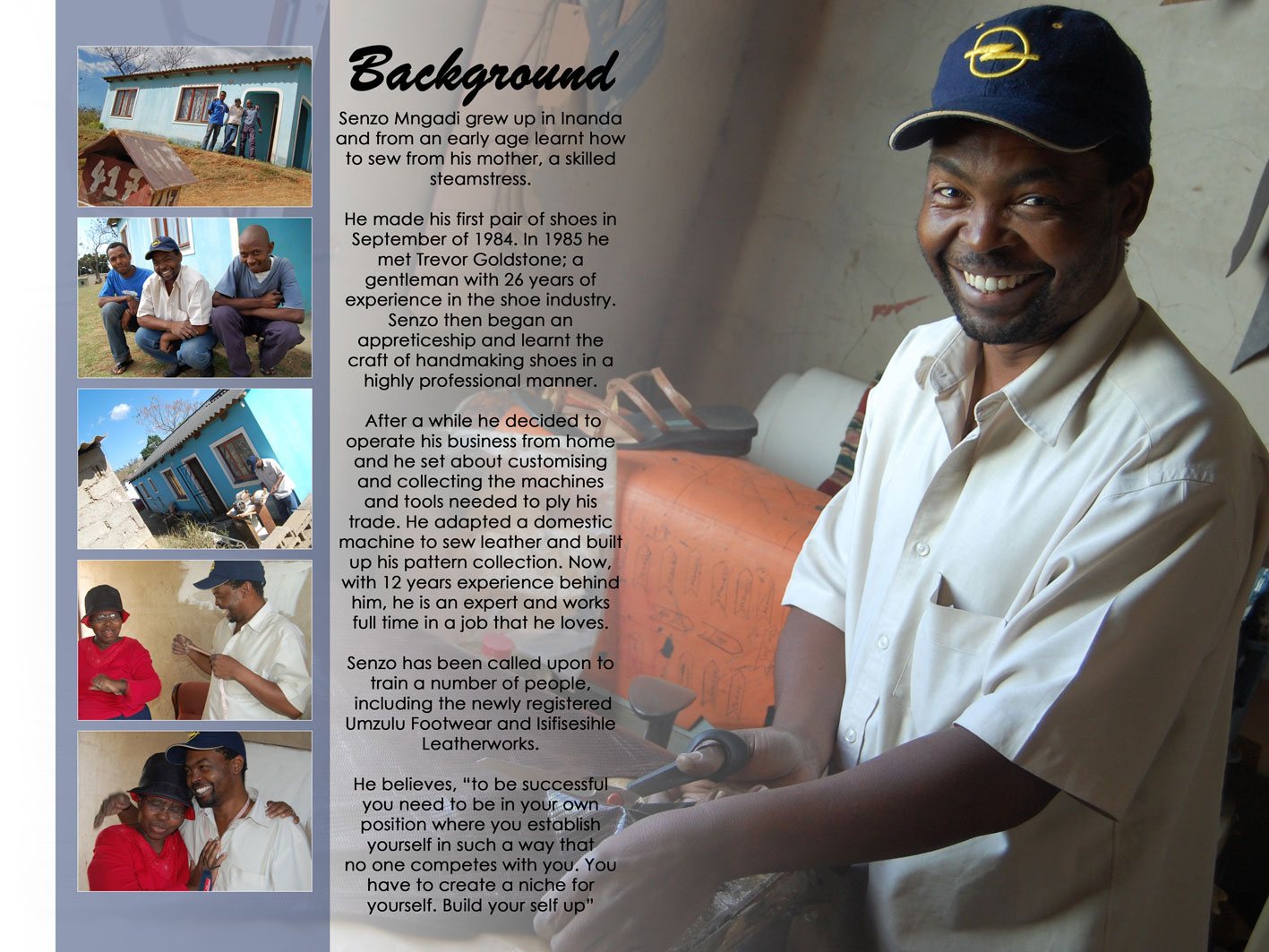
Our story starts two generations before the company, in Inanda, north of Durban, with Thabani’s grandmother, a seamstress who sewed cloth. She taught her son, Mr Mngadi Senior, to sew.
Mr Mngadi Senior made his first pair of shoes in September 1984. A year later he met Trevor Goldstone, a shoemaker with 26 years in the trade, and began an apprenticeship with him. There he learnt to make shoes to a professional standard.
A workshop at home
After a while Mr Mngadi Senior set up a workshop at home and adapted a domestic sewing machine to take leather. He collected his machines and tools one at a time. He also built up a collection of paper patterns.
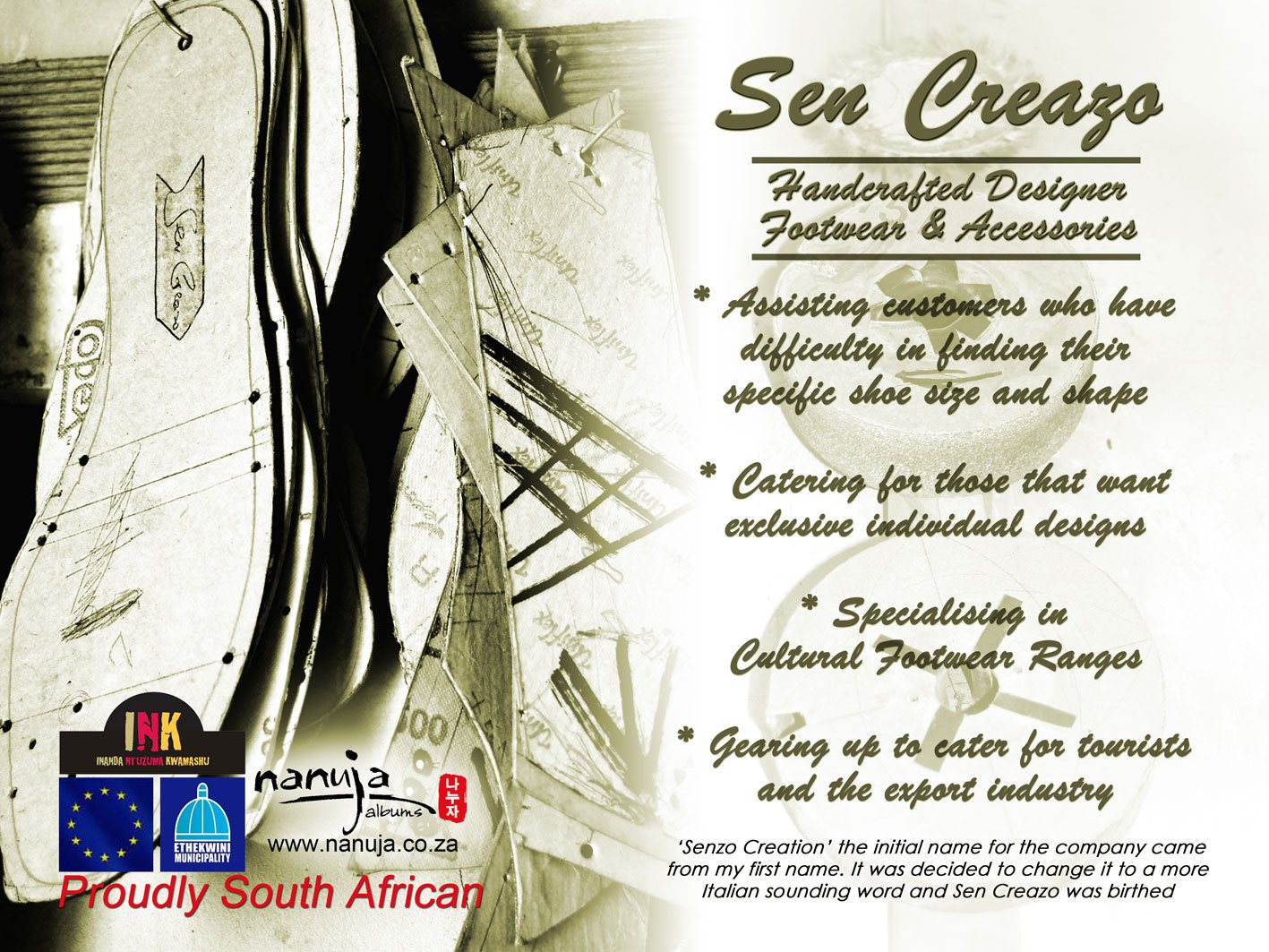
He first named the business Senzo Creation, after himself. In his own brochure he explains why it changed: it was decided to change it to a more Italian-sounding name, and Sen Creazo was born.
Shoes made to measure
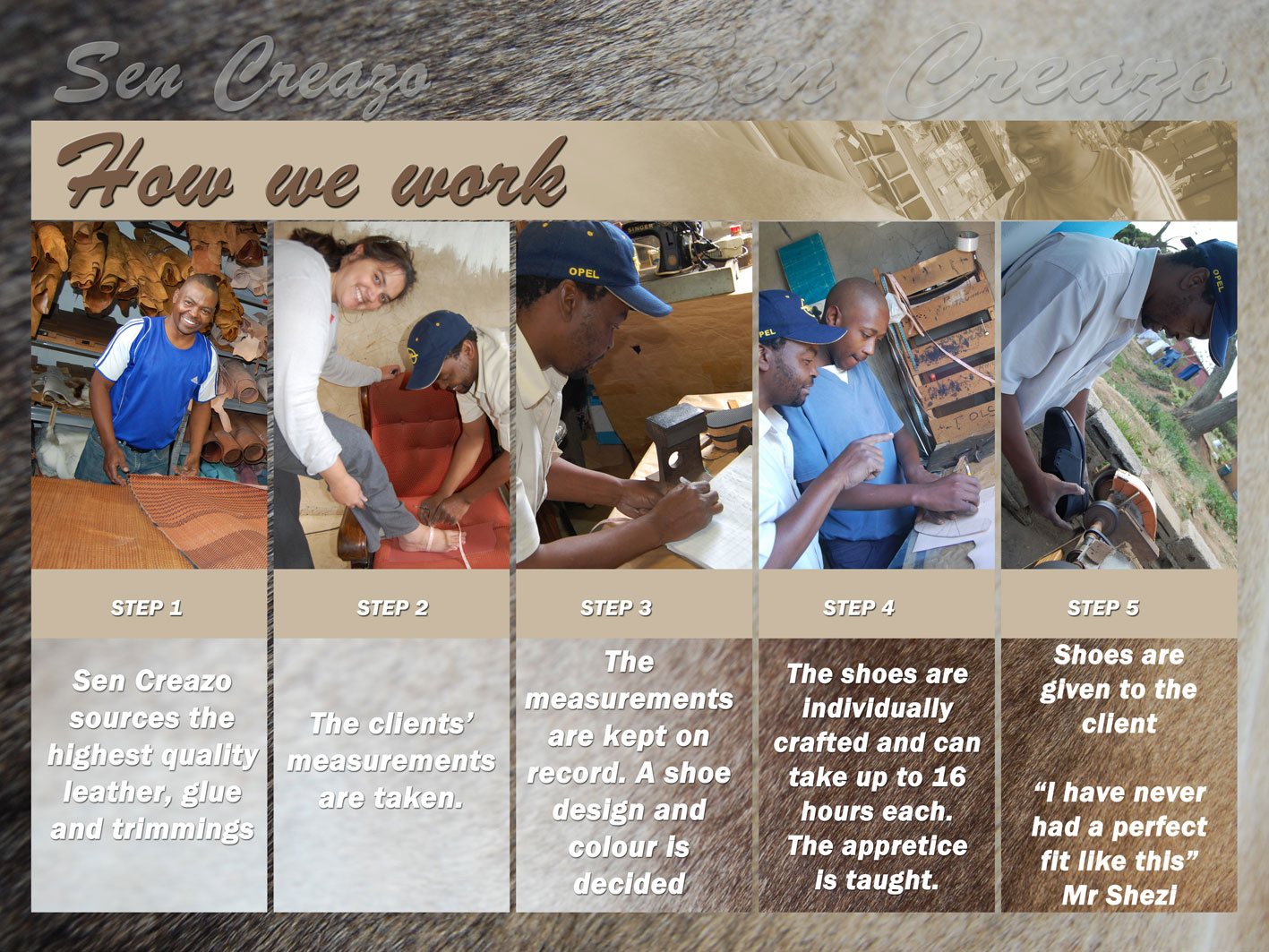
Sen Creazo made shoes for one person at a time, and the brochure sets out the method in five steps. Mr Mngadi Senior sourced the leather, glue and trimmings himself. He took each client’s measurements and kept them on record, and the design and colour were decided. A pair could take up to 16 hours. Then the shoes went to the client. One of those clients, a Mr Shezi, is quoted on the page: “I have never had a perfect fit like this.”
We work to the same idea today: a piece made for one person, after they ask for it. Every CHARGEO piece is made to order.
Training others
Mr Mngadi Senior trained others, among them two newly registered businesses, Umzulu Footwear and Isifisesihle Leatherworks. In his brochure he writes that he wants to help more young people into the industry by training and equipping them.
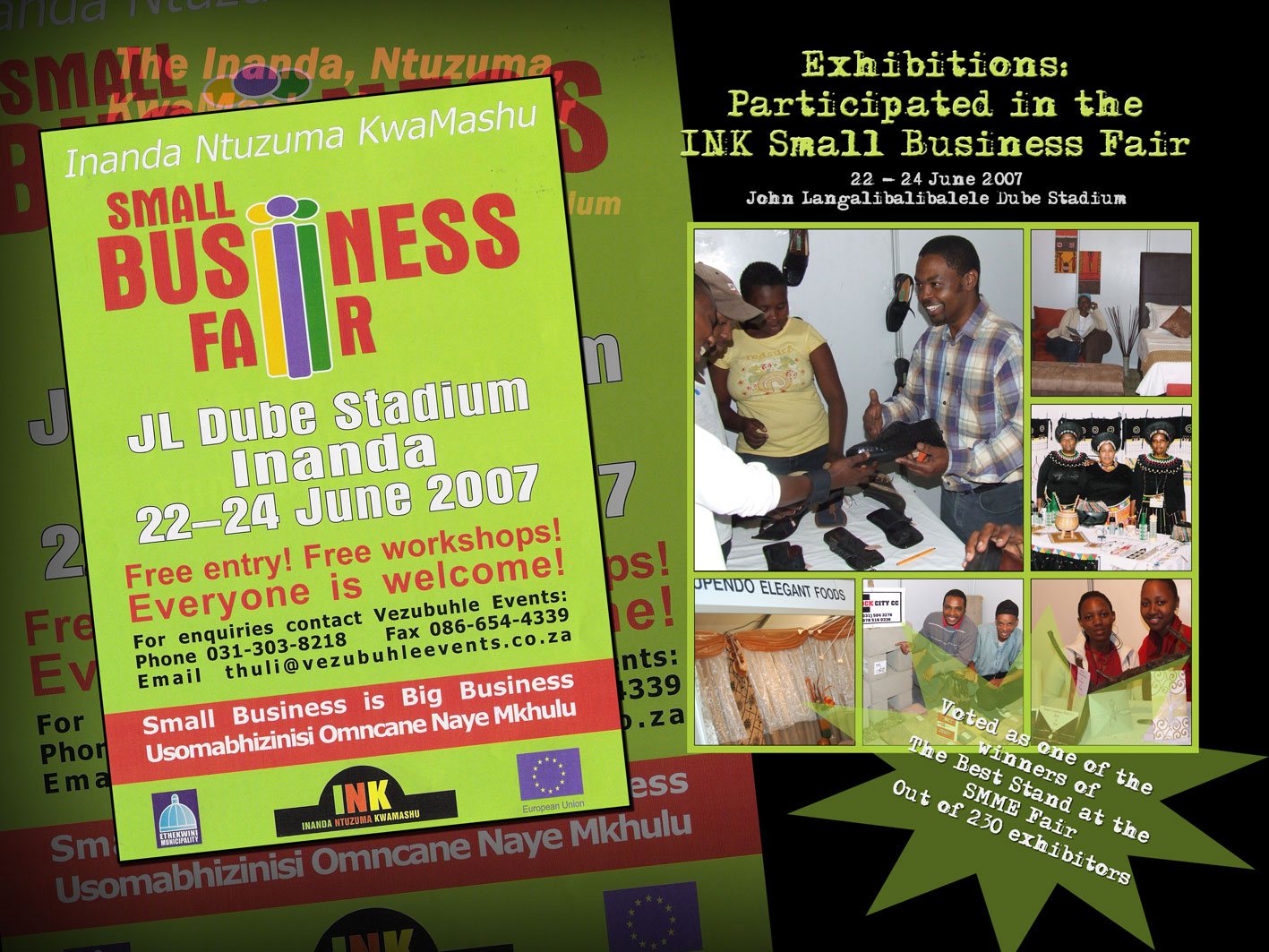
In June 2007 he took a stand at the INK (Inanda, Ntuzuma, KwaMashu) Small Business Fair at John Langalibalele Dube Stadium in Inanda. Of the 230 exhibitors, his stand was voted one of the best.
His advice from those years is short: “You have to create a niche for yourself.”
Thabani in the workshop
Thabani grew up in that workshop. He learnt the trade from his father and grandmother, then went on to study engineering. Both show in how we design today. Thabani starts with how a piece is built, then decides how it should look.
Chapter 2: The first pieces (2021)
Two founders
Terrence and Thabani grew up in the same township and went to the same high school. At school they were in a rap group together, 212 SWAT. Then life took them in different directions, and for years they did not see each other.
Terrence studied business administration and business management at the Durban University of Technology. He went on to start his own digital agency and a mobile e-commerce business. Thabani studied engineering and kept working in his father’s trade.
In 2020 the two met again, in Durban Central. Thabani was carrying a leather backpack: the first bag he had ever made, made for his son. It was simple, a plain oxblood leather body with a zip and two straps. Terrence saw where it could go.
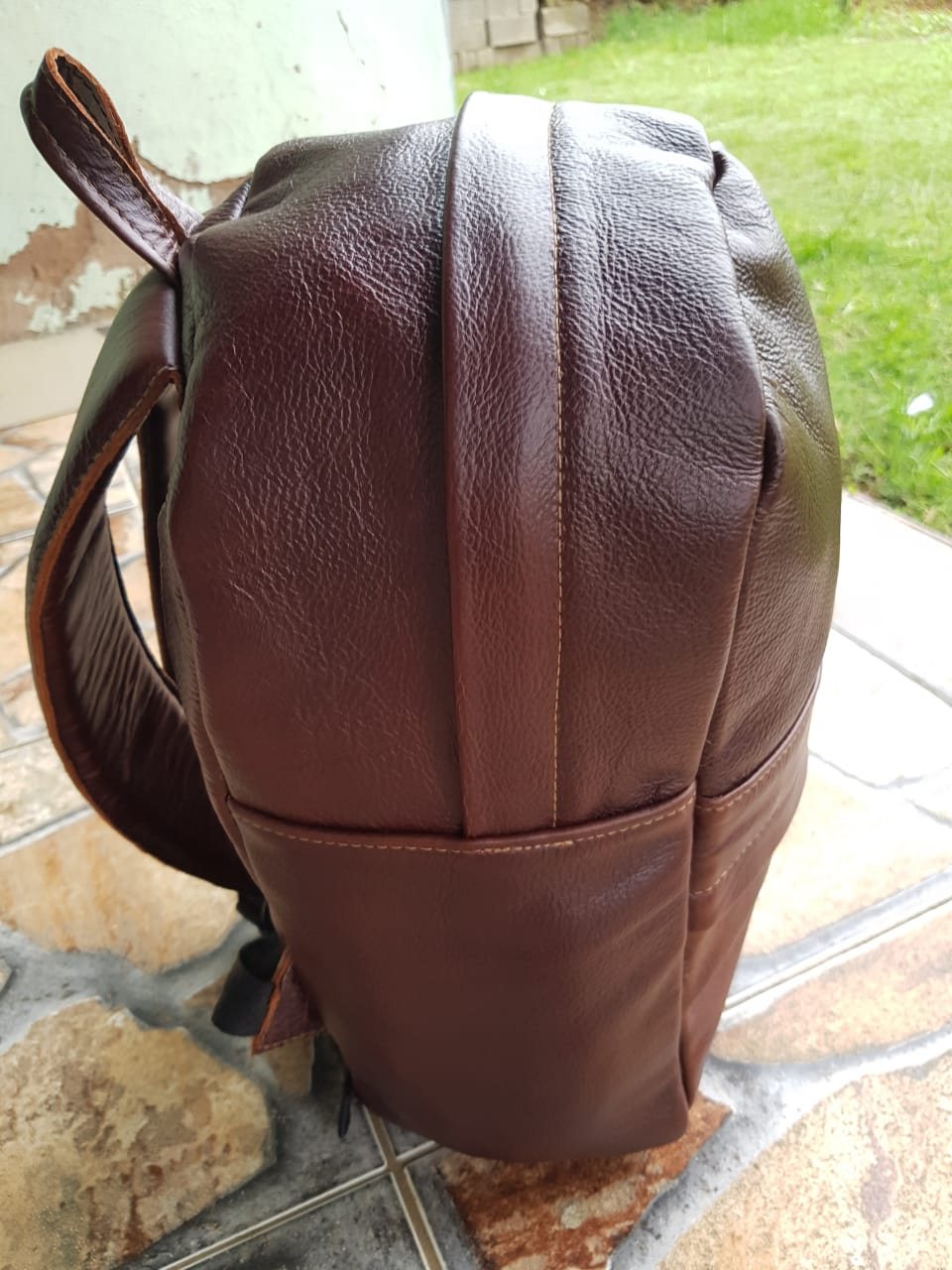
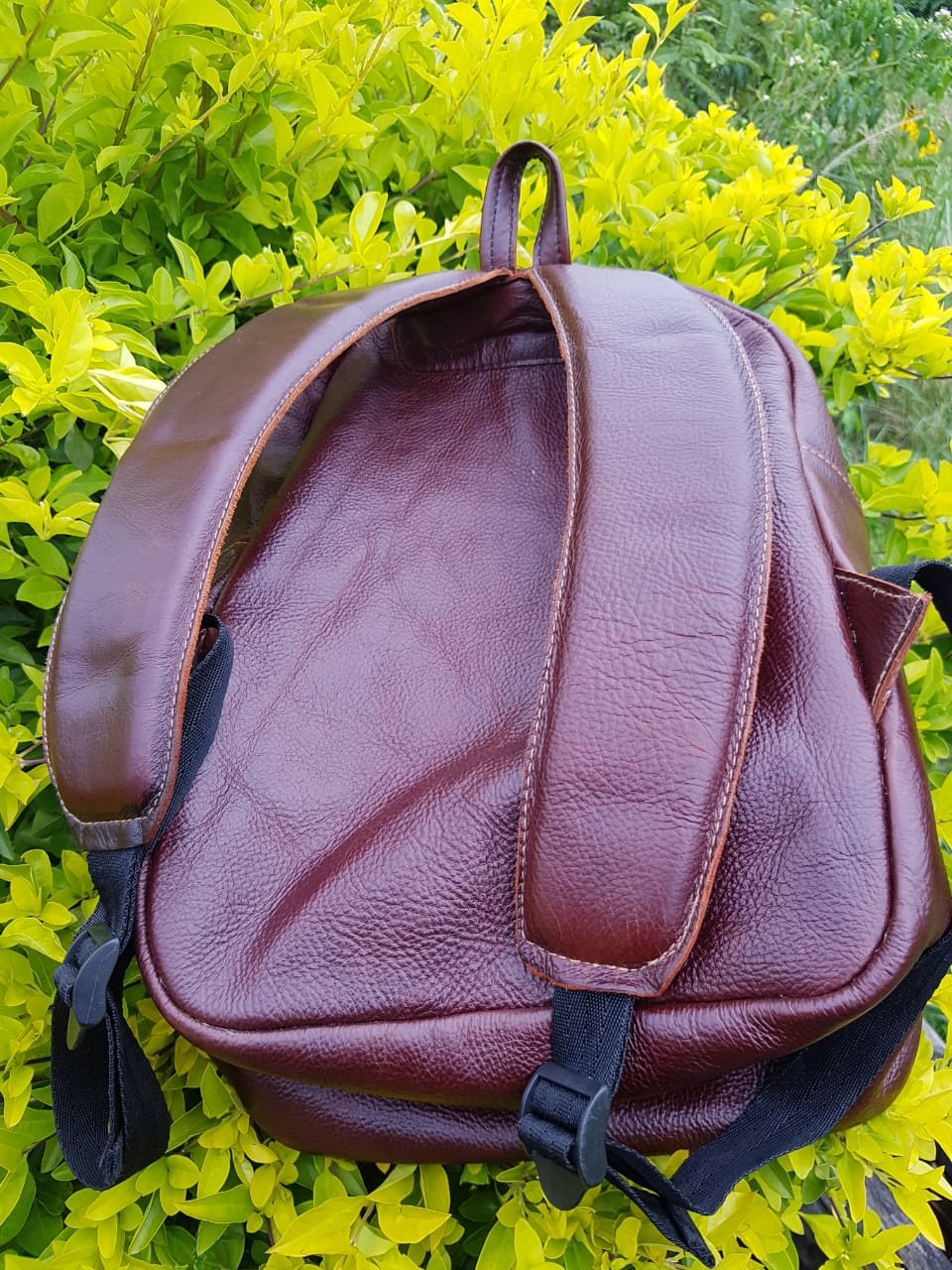
That bag is where CHARGEO starts. One knew leather and how a piece is built. The other knew brands and how to sell online. In March 2021 they registered CHARGEO, each with an equal share.
Where the name comes from
The name CHARGEO began as a nickname. Thabani’s father, Mr Mngadi Senior, was a taxi driver. He drove the first turbocharged taxi in the neighbourhood, and it made his trips faster than anyone else’s. When his son was born, he called him Turbo Charge. The township changed it, and Turbo Charge became Chargeo.
We chose that name for the house because of what it stands for. It is the constant pursuit of excellence, the idea the Japanese call kaizen, said in a South African way. It is also the pursuit of looking good and feeling good.
What we first made
Our first business profile, written in September 2021, lists what we set out to make: leather shoes made to measure, belts, backpacks, laptop bags, handbags and wallets. We also offered leather repair. The tagline then was “Timeless, Stylish, Quality”. The mission was to supply all of Africa and to keep finding new ways to work with leather.
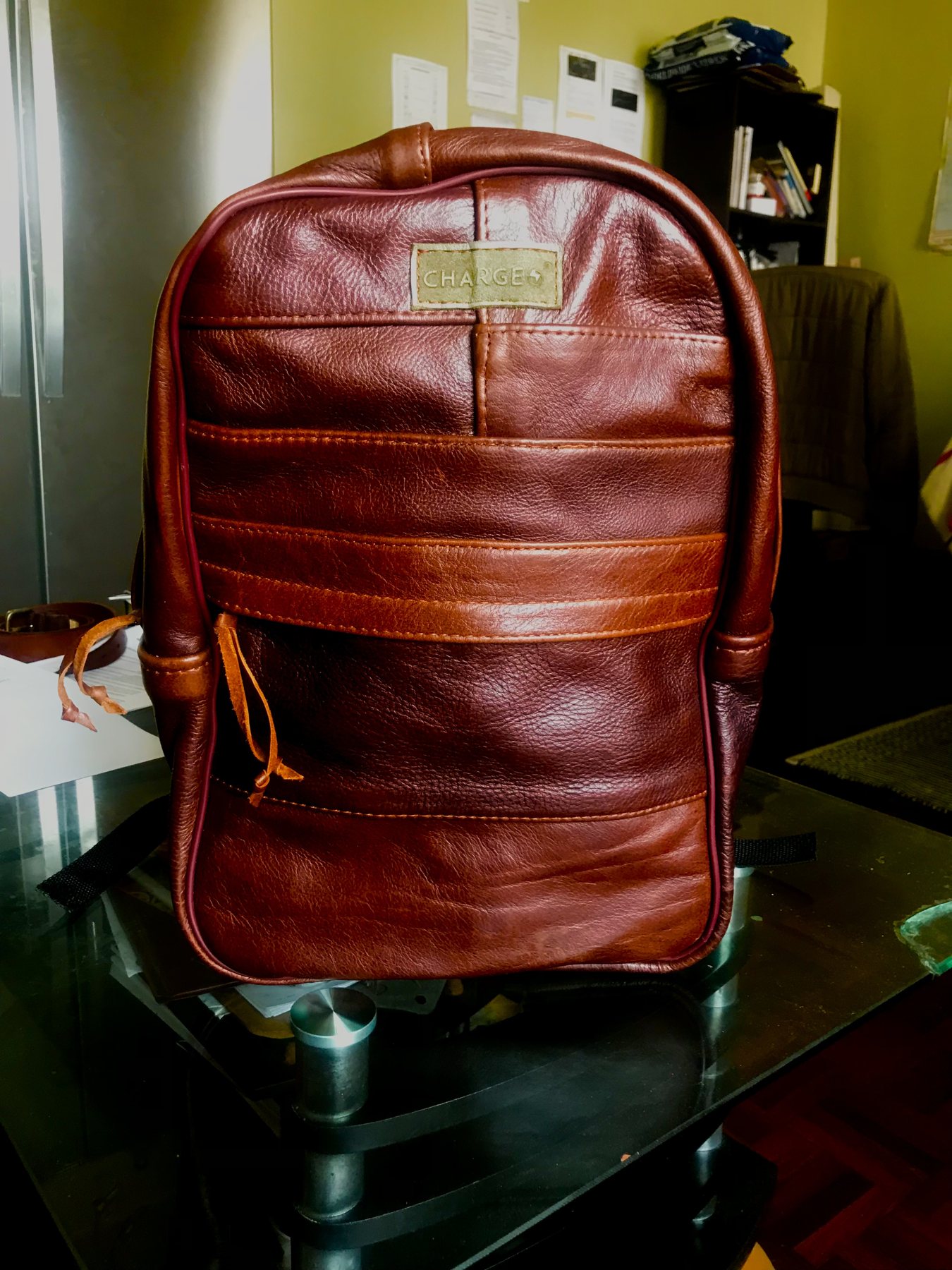
We worked from a home workspace. Our first photographs are phone pictures, taken on a table or a workshop floor. They show bags with uneven edges and heavy stitching.
By June 2021 the first range was photographed on a glass table at home: backpacks in oxblood, tan and silver, a laptop bag and the first belts. Each new bag was a little better than the one before.
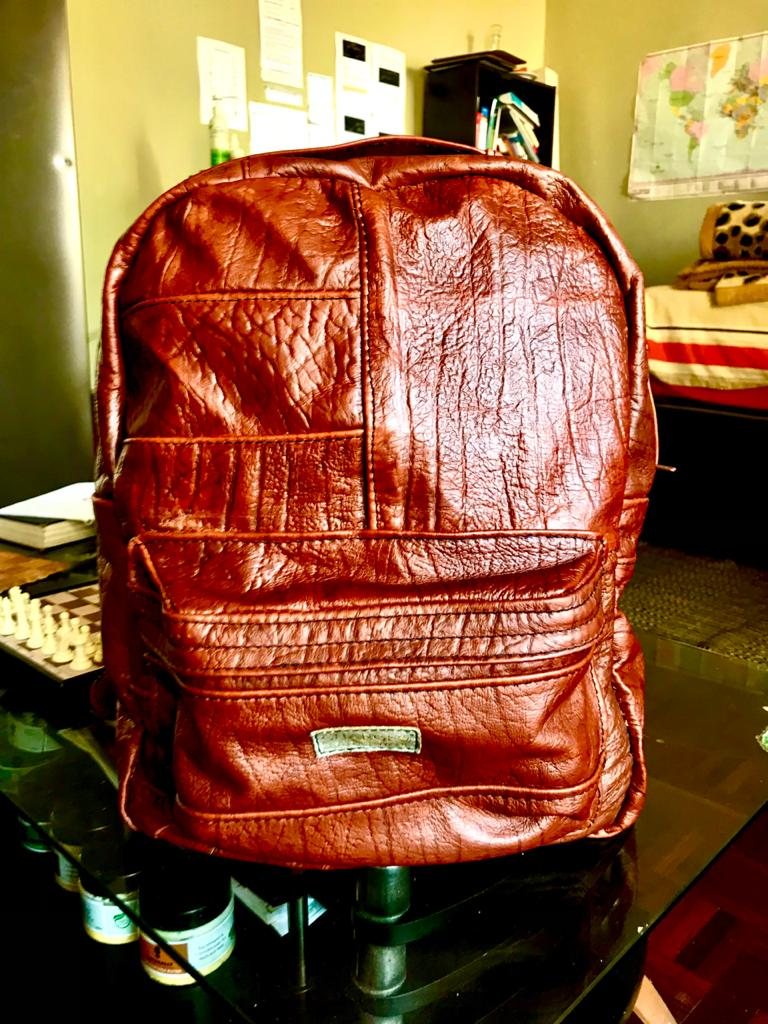
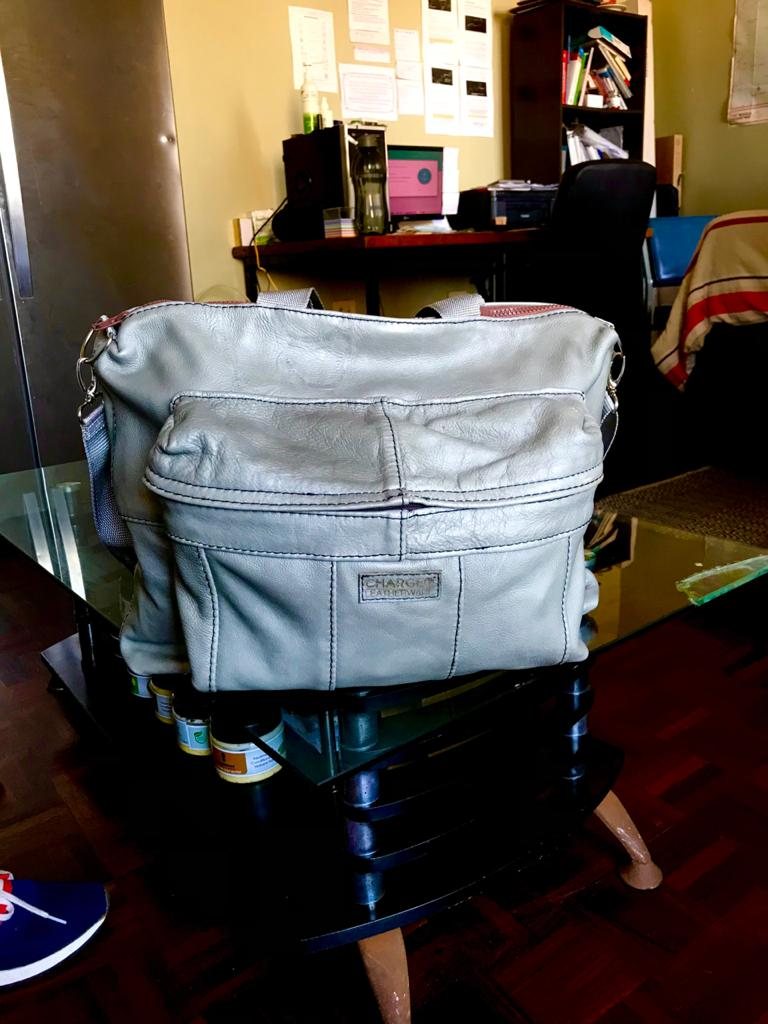
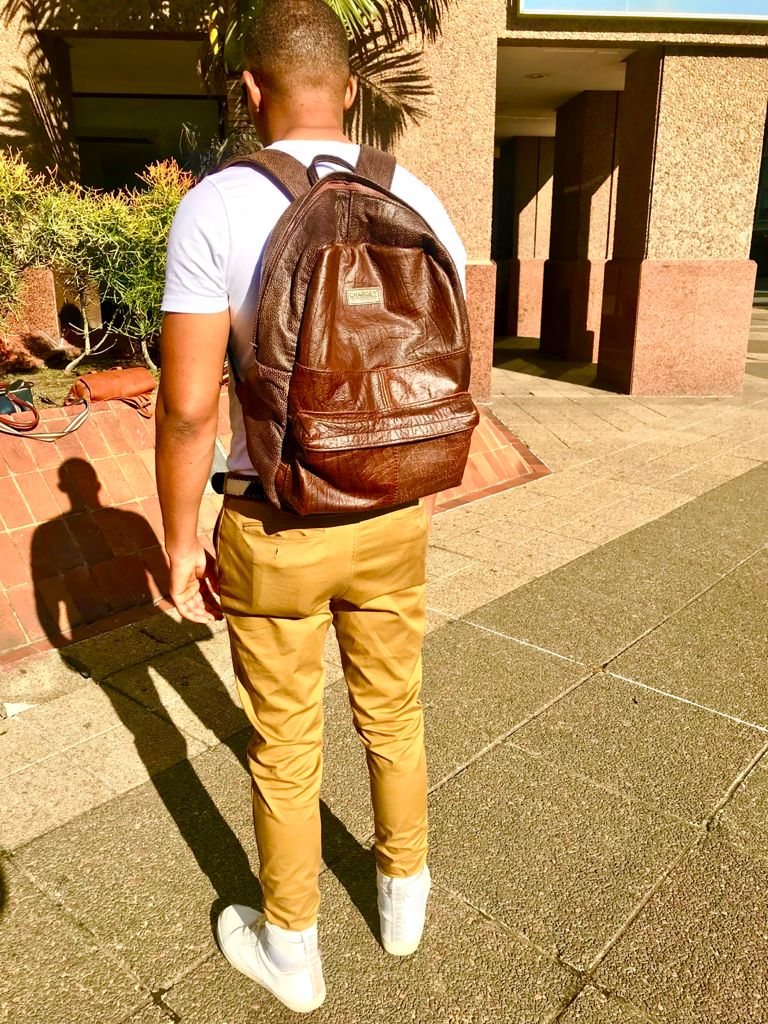
A power bank for load-shedding
In 2021 load-shedding was part of daily life in South Africa. Our first idea to set our bags apart was a practical one. Each laptop bag would come with a power bank that could charge a laptop or phone, and our backpacks and handbags with a wireless power bank for phones and tablets. We also designed an electric leather jacket for cold climates. It stayed a design.
The power bank taught us that a clever feature does not make someone want a piece. People want it for how it looks, what it is made from and how it feels to carry. Our pieces today carry no power bank. We kept working on the bag itself.
Chapter 3: First recognition (2022)
The first professional shoot
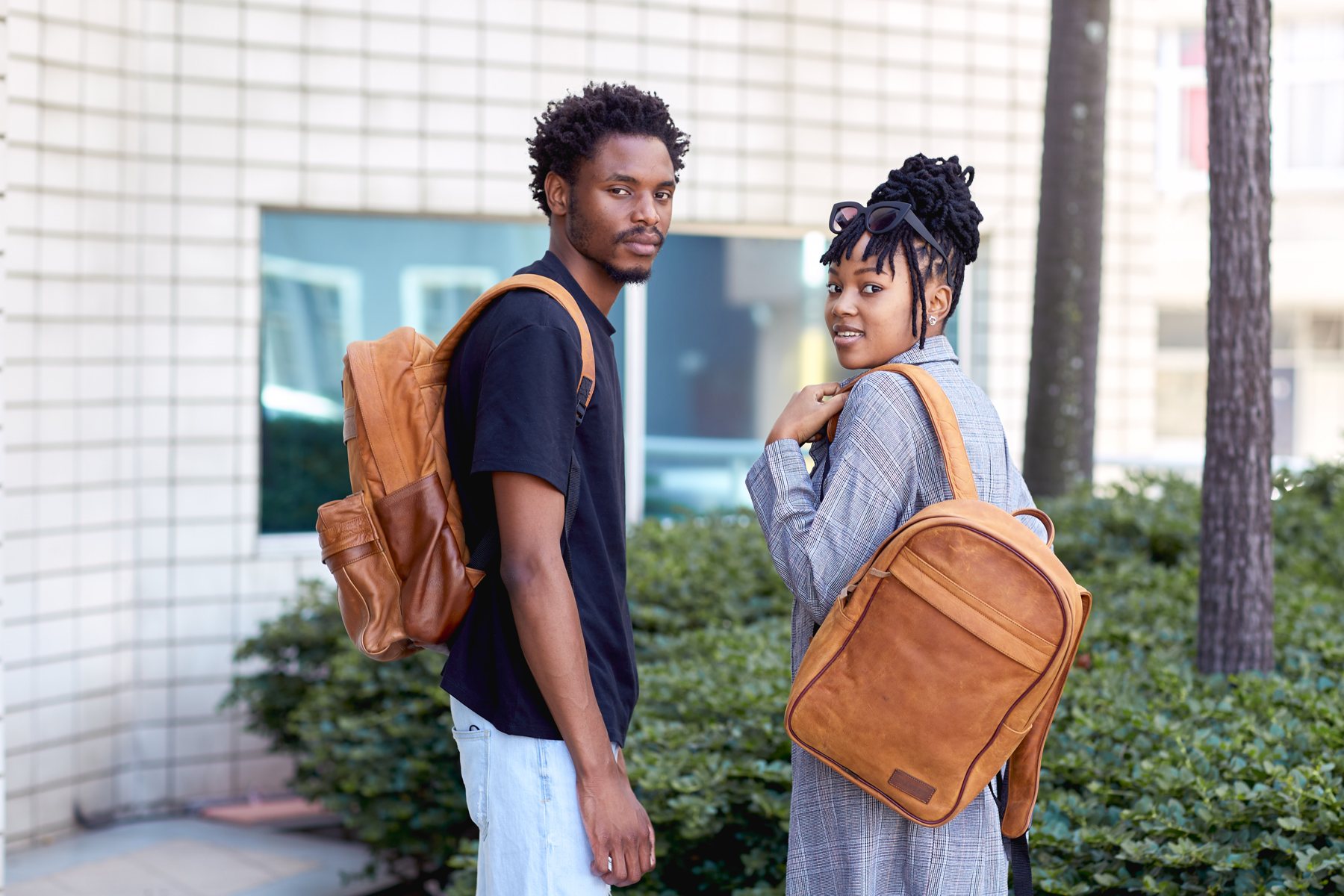
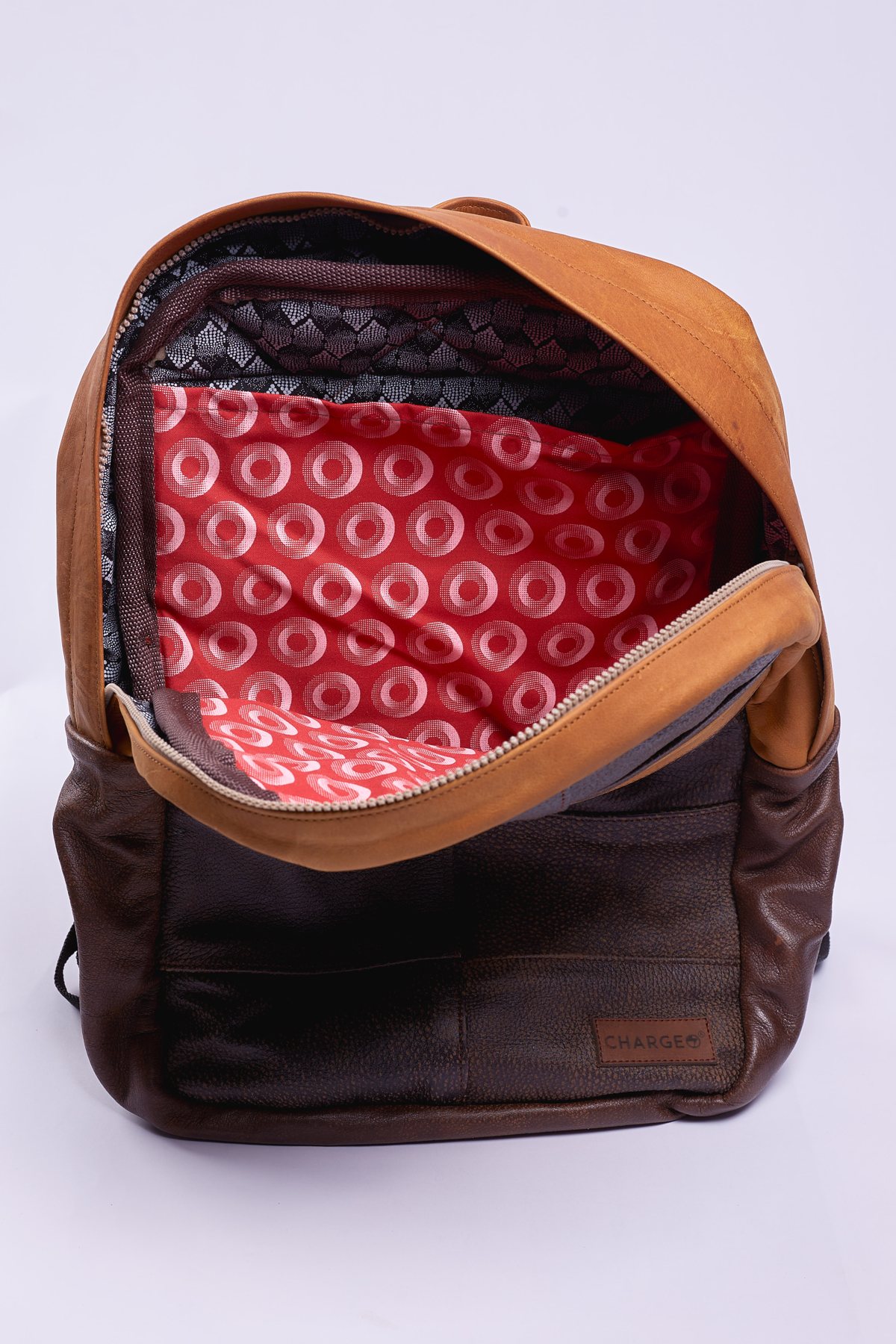
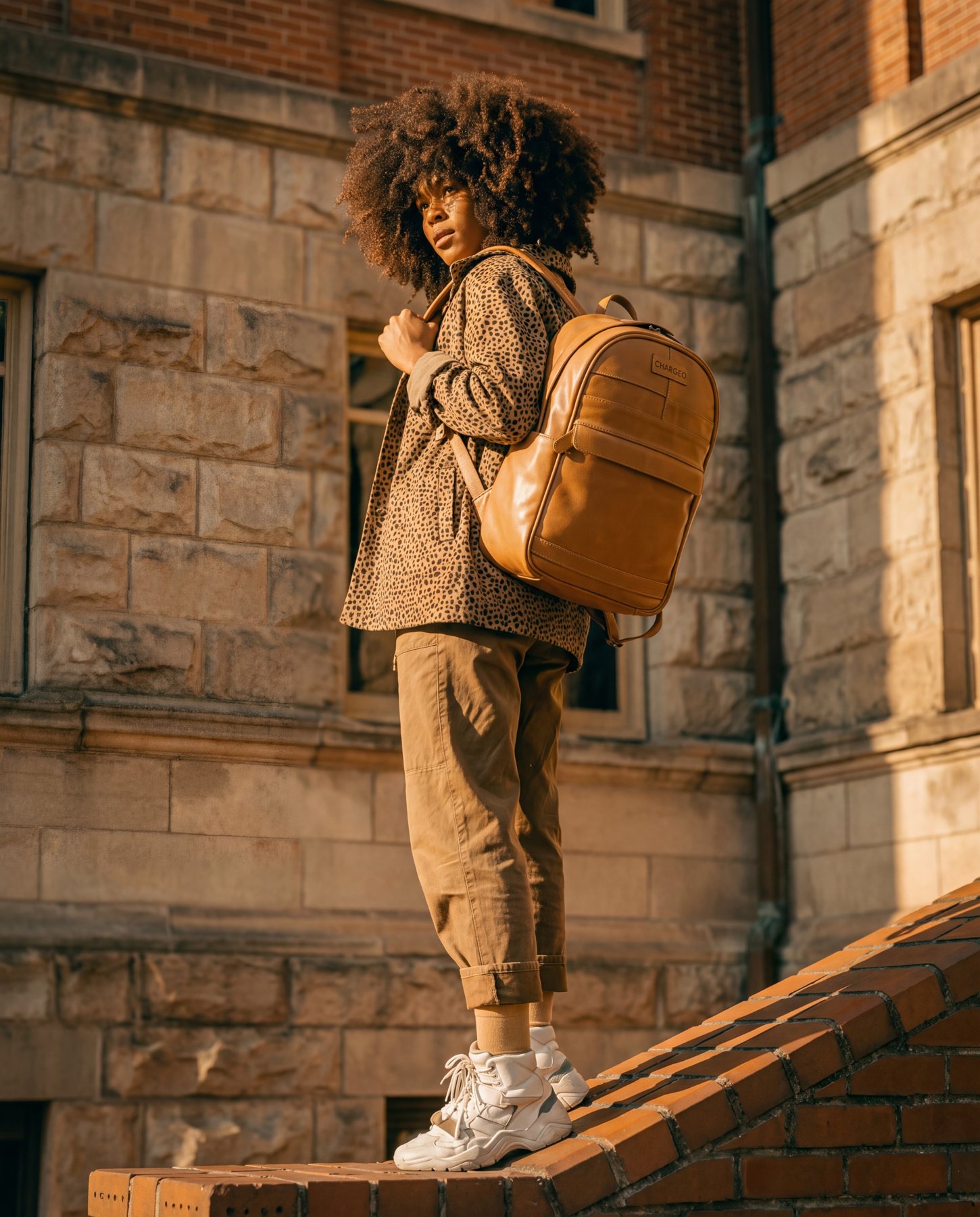
In January 2022 we held our first professional photo shoot, on the streets and steps of old Durban buildings. For the first time our backpacks were photographed on people, in tan and brown leather, with studio pictures of each bag inside and out. By then each backpack style carried the name of a South African city or suburb: Fourways, Pretoria and the rest.
Third prize at GAP GREEN 2021
In February 2022 The Innovation Hub wrote to tell us that its adjudication panel had selected CHARGEO as the third prize winner of the Gauteng Accelerator Programme GREEN 2021. GAP GREEN rewards work that cuts waste and pollution. Our entry was about reusing industrial leather waste.
It was the first time an outside panel had judged our work, and the result told us the offcut idea was worth pursuing.
Our machines
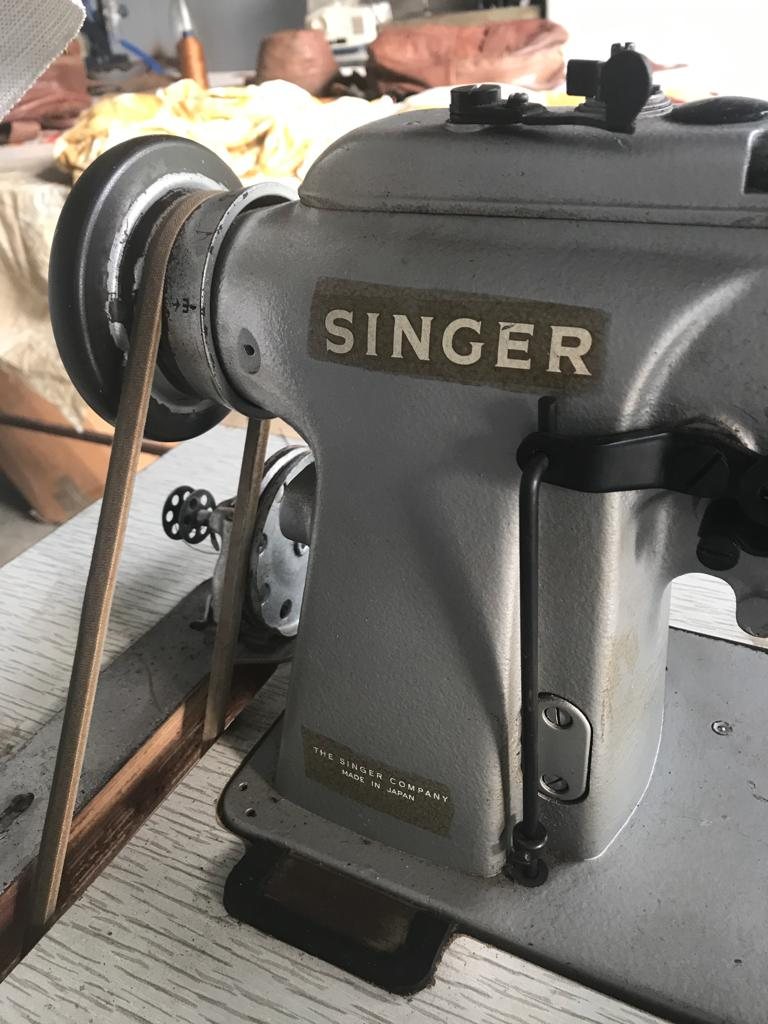
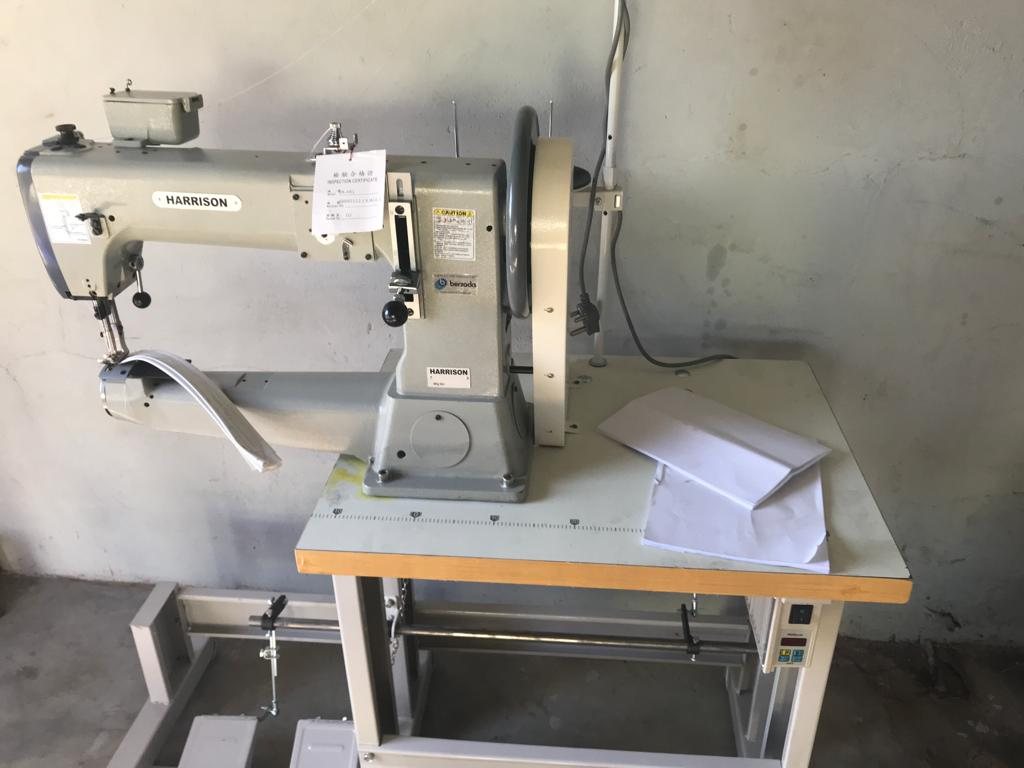
In May 2022 we photographed the machines for our workshop: heavy sewing machines built for leather, and a hand press for rivets.
Radio and the Durban Business Fair
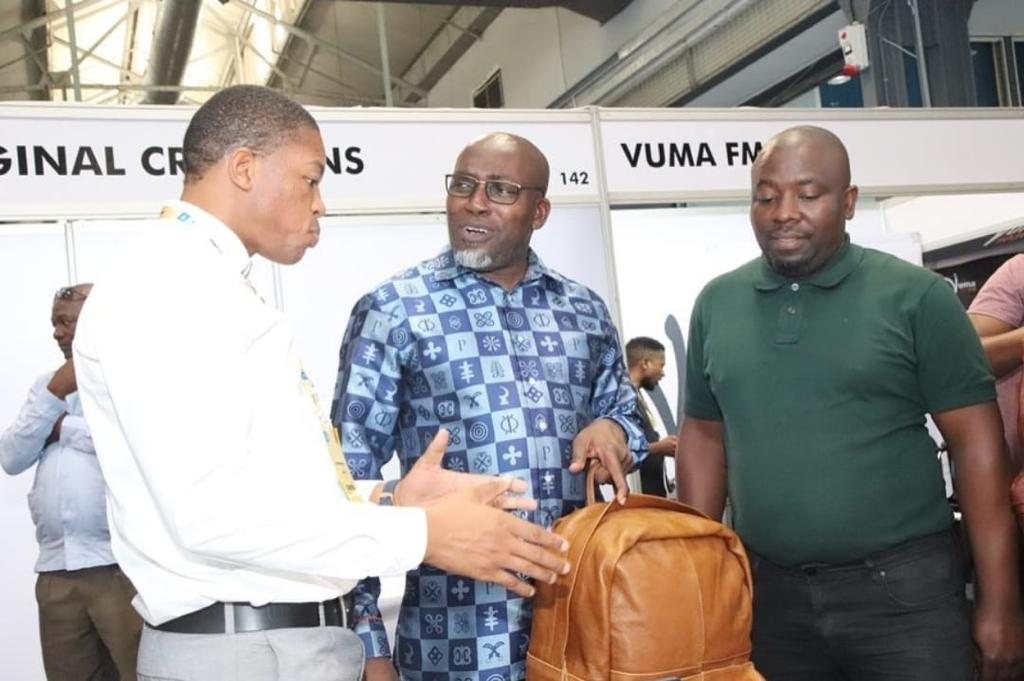
In 2022 Terrence spoke about CHARGEO on Gagasi FM. The same year we applied to the Durban Business Fair and presented our backpacks there, as part of the Sekela Programme, the SA Home Loans programme for small businesses in KwaZulu-Natal. At the Fair we showed our backpacks to the then Mayor of eThekwini, Councillor Mxolisi Kaunda.

The trademark
In October 2022 the CHARGEO trademark was registered. Until then we had used the name. From that month, we owned it.

Teaching the trade
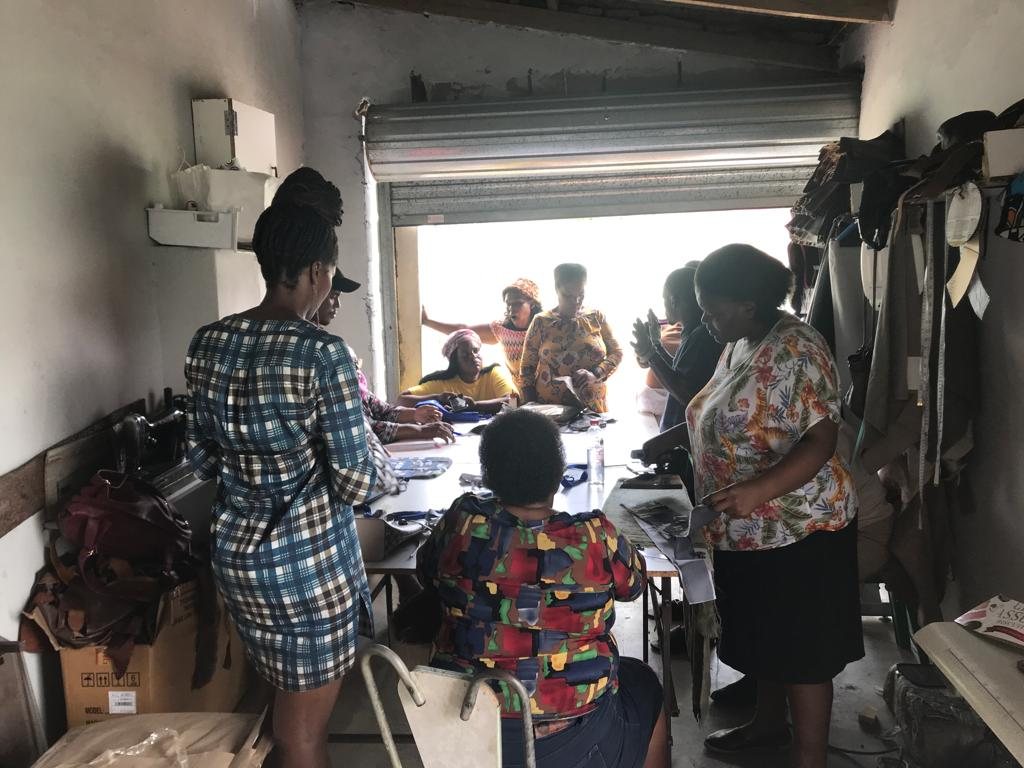
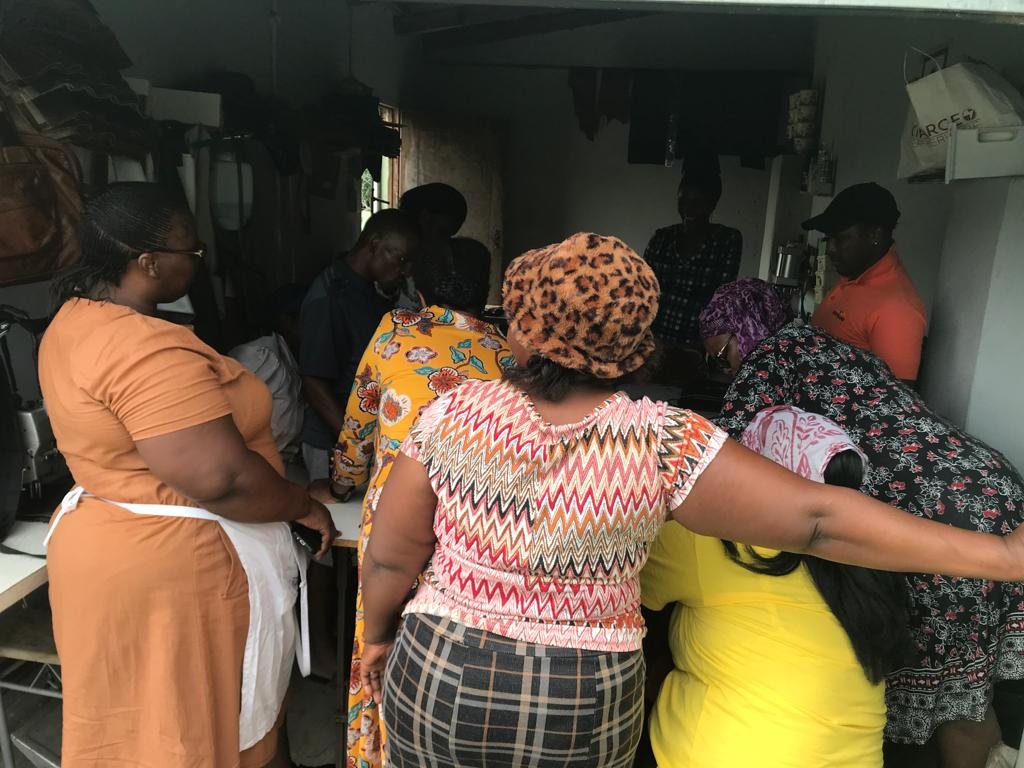
In February 2022 eThekwini Municipality asked for quotations to train a group of textile co-operatives in making leather bags and belts. We ran the training over four days: one day of theory and three of practical work, covering design, cutting, dyeing, preparing components, assembly and quality checks. Nine people took part, and each finished the course by making their own backpack.
It was Mr Mngadi Senior’s way of working, passed on again: teach the next maker.
Chapter 4: The first shoots and Zulu Treasure (2023)
The marina shoot
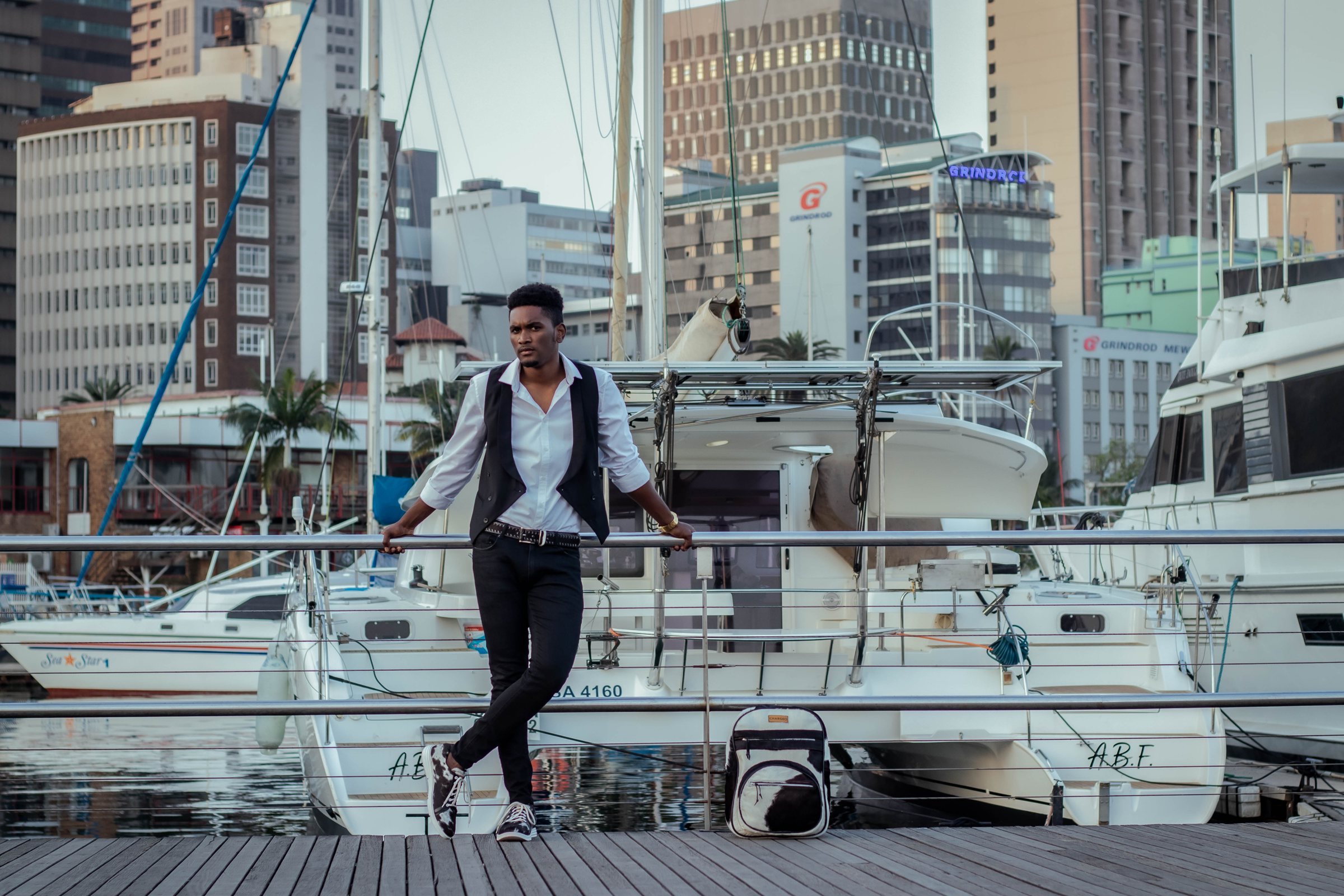
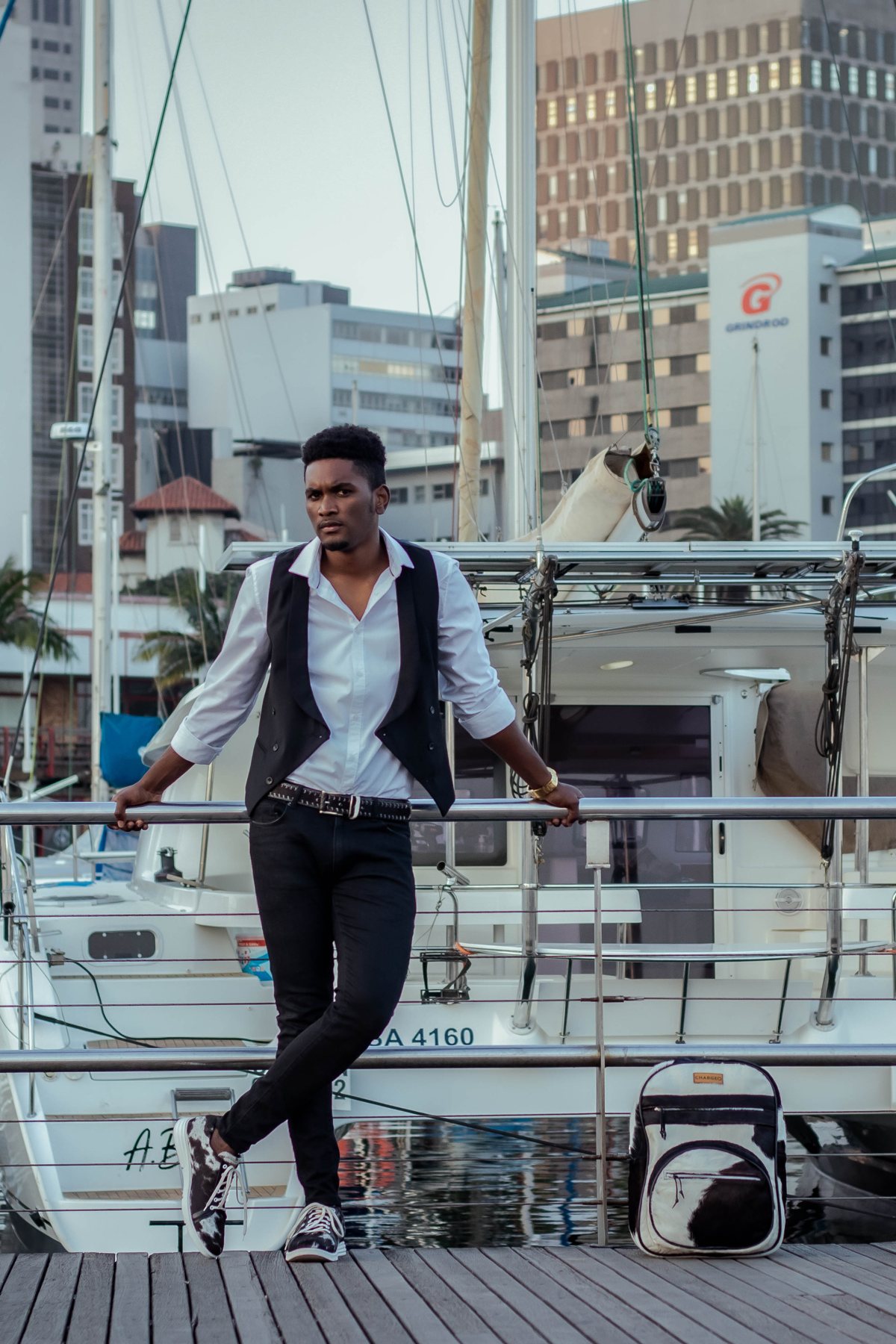
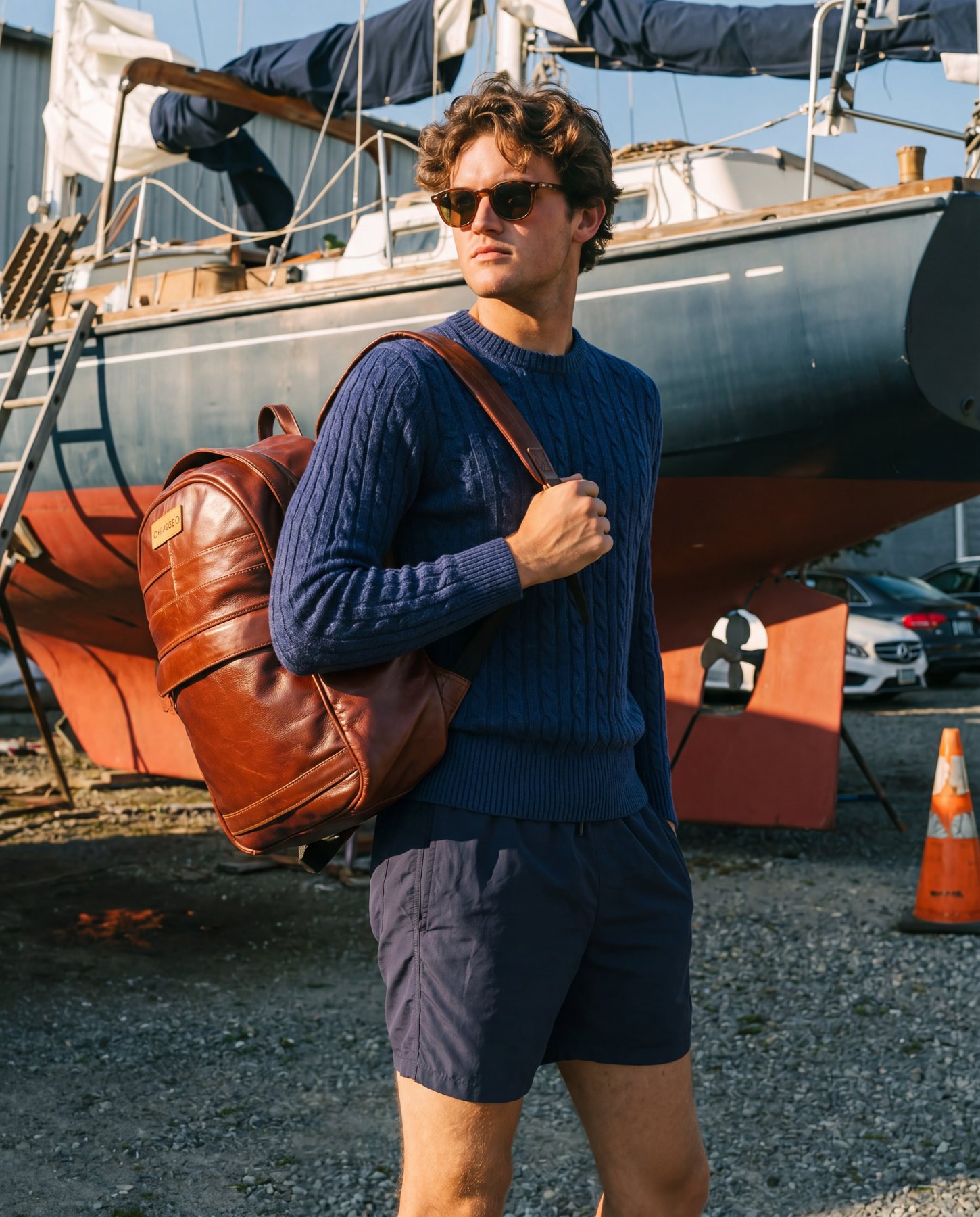
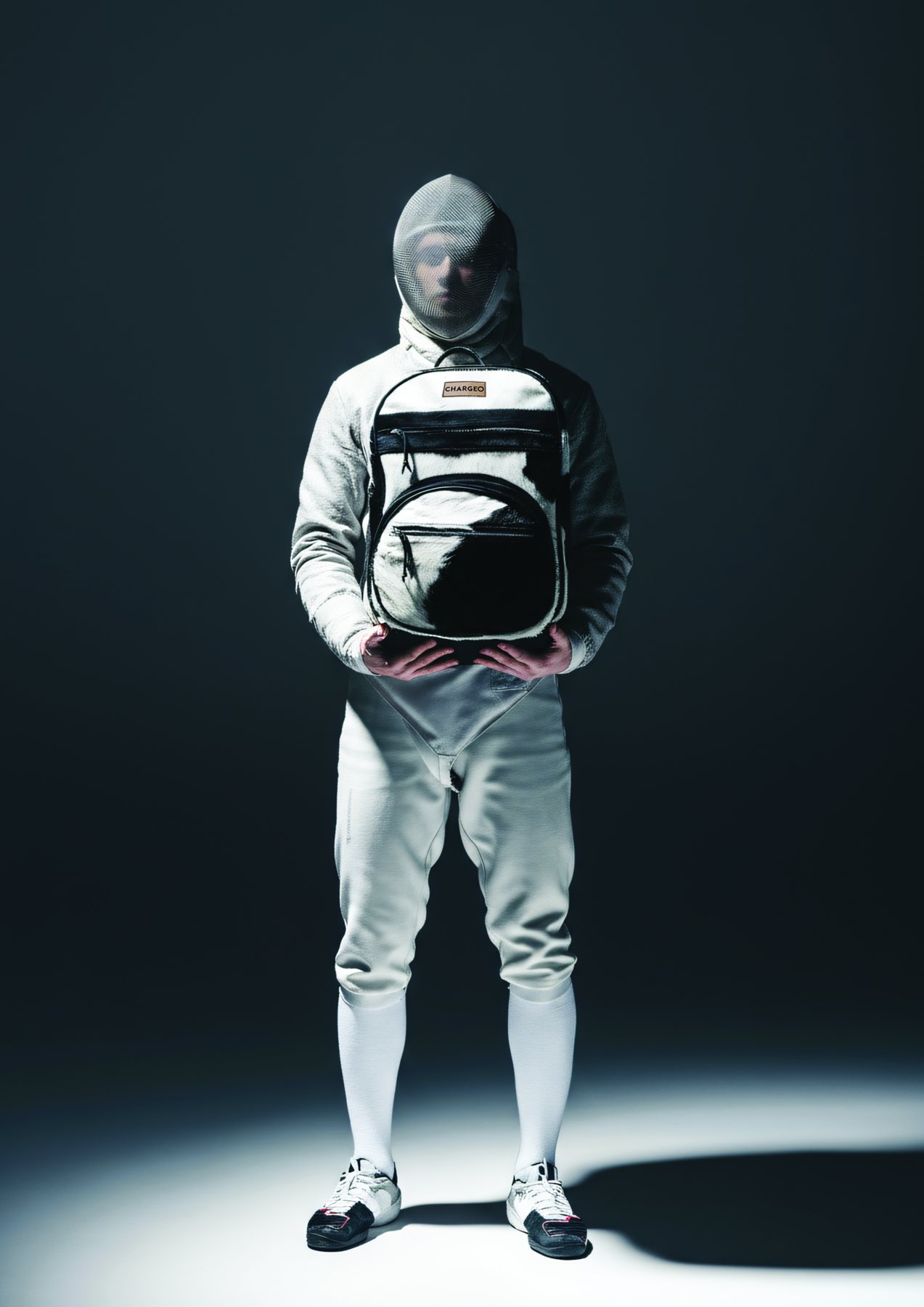
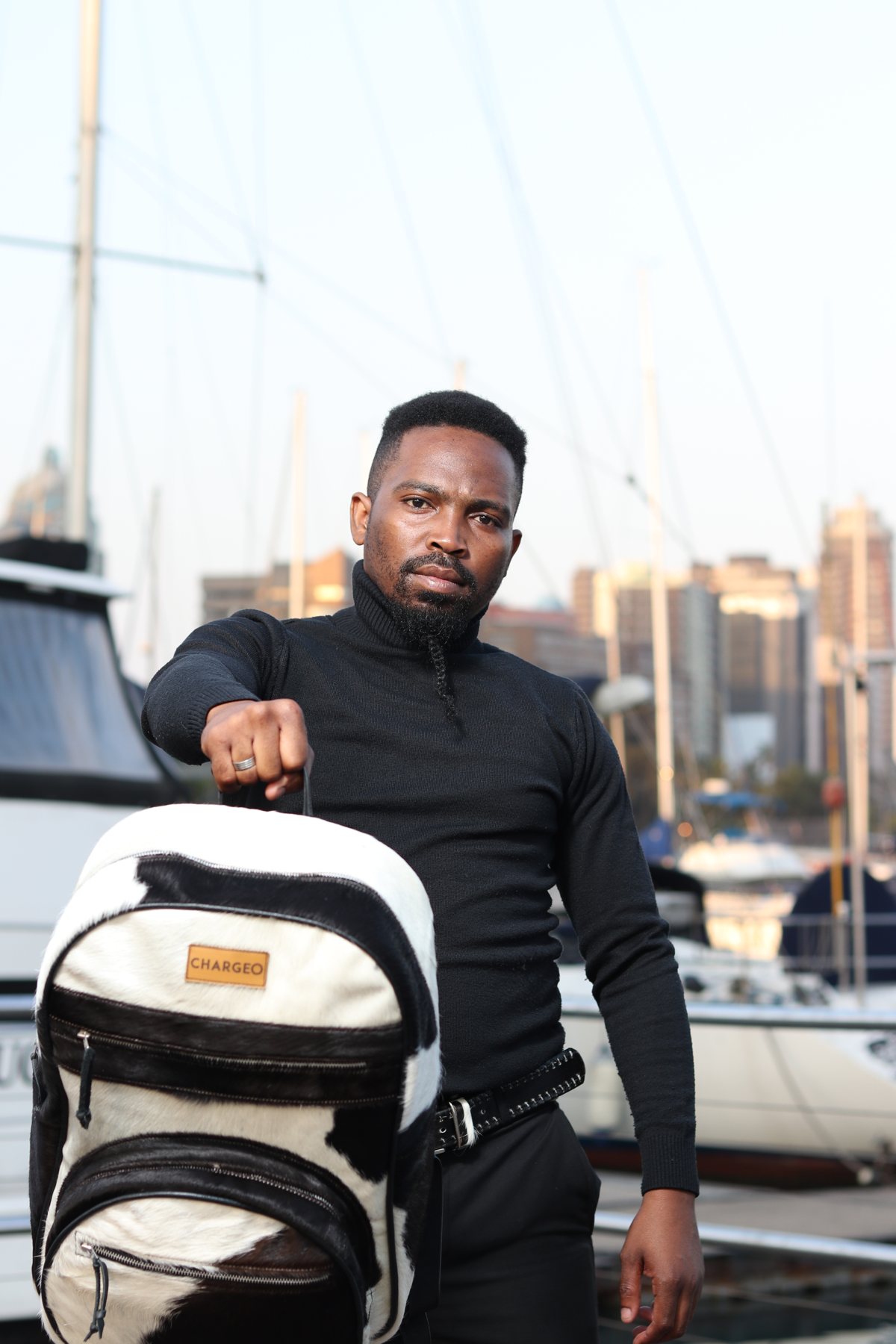
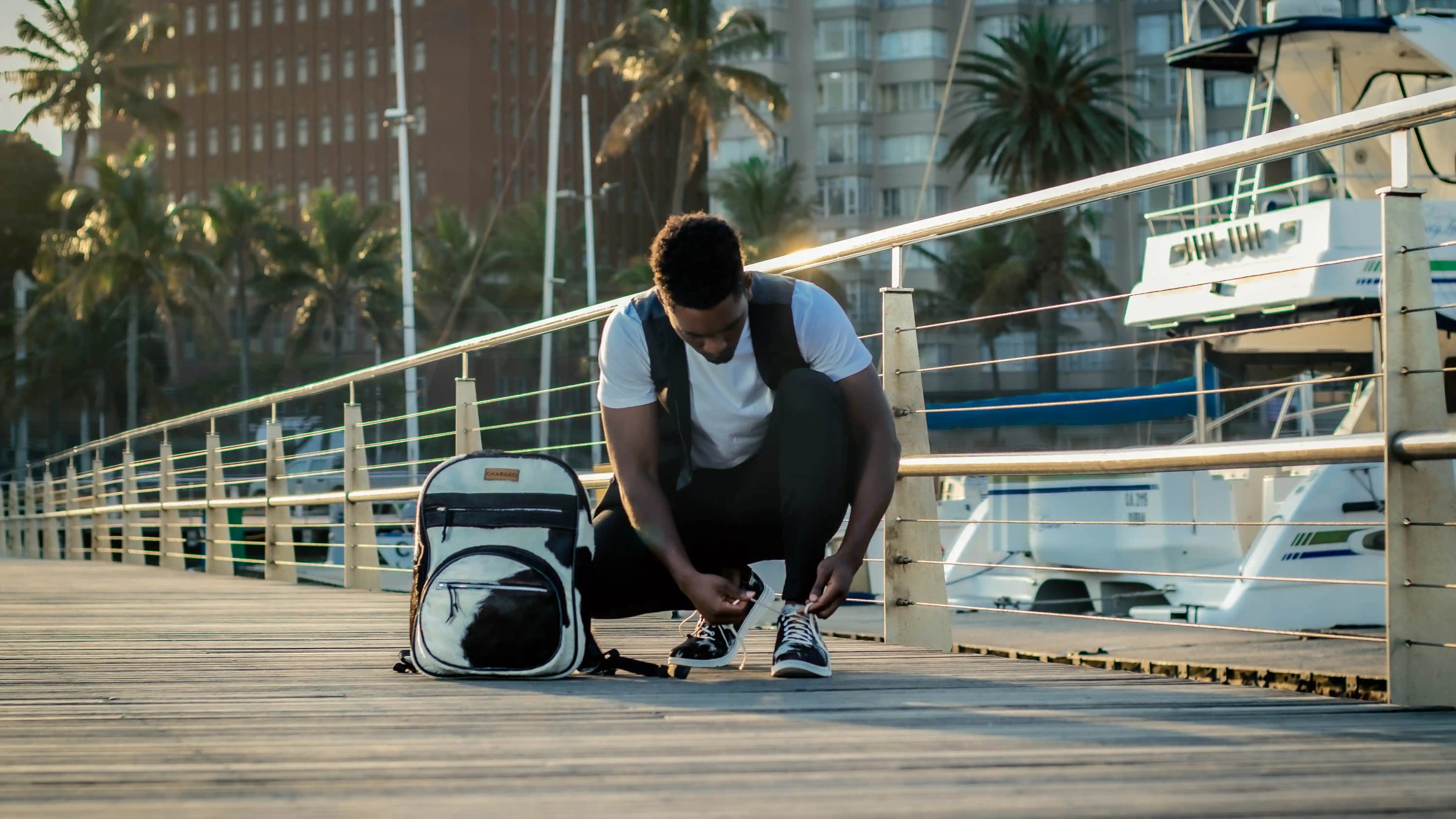
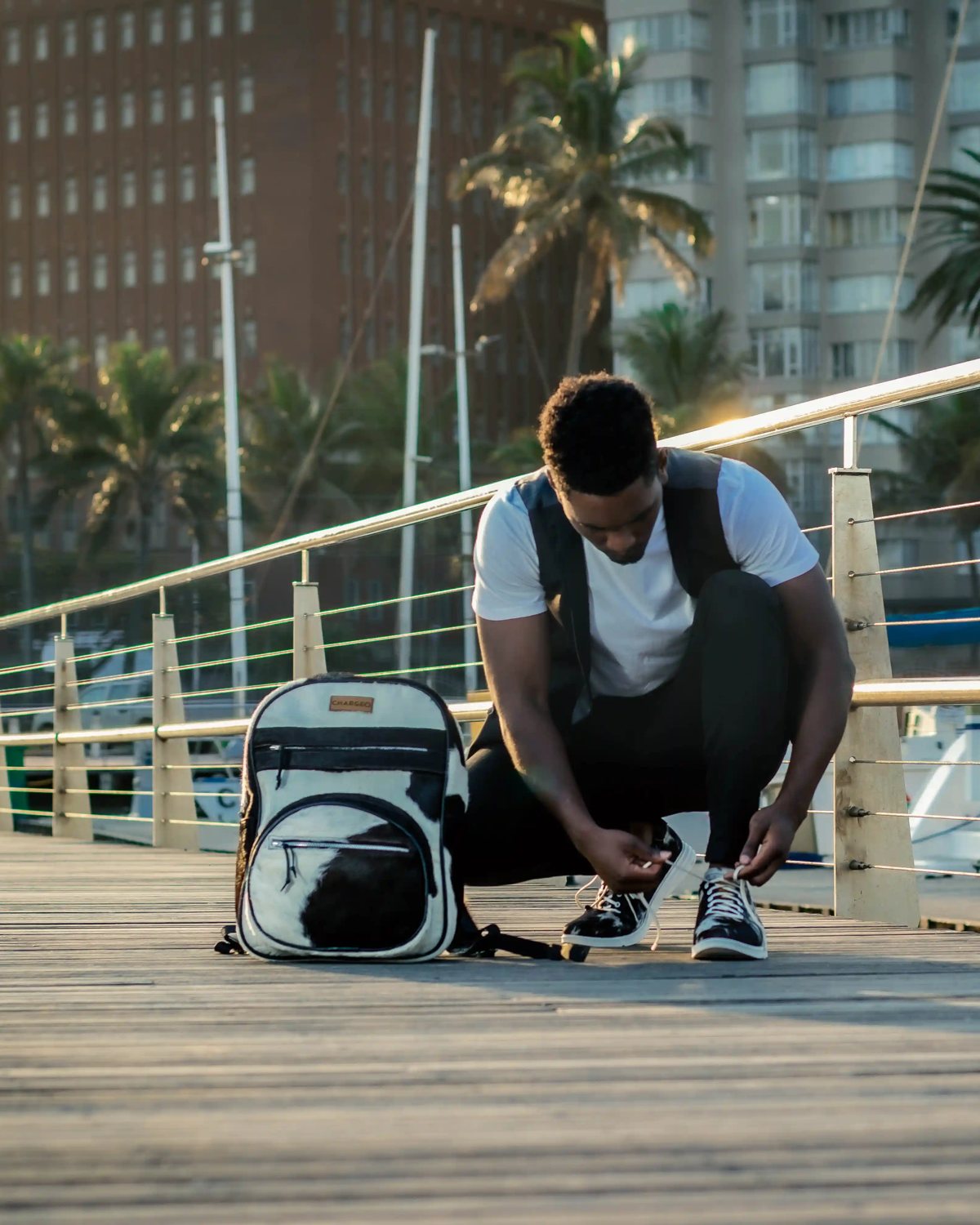
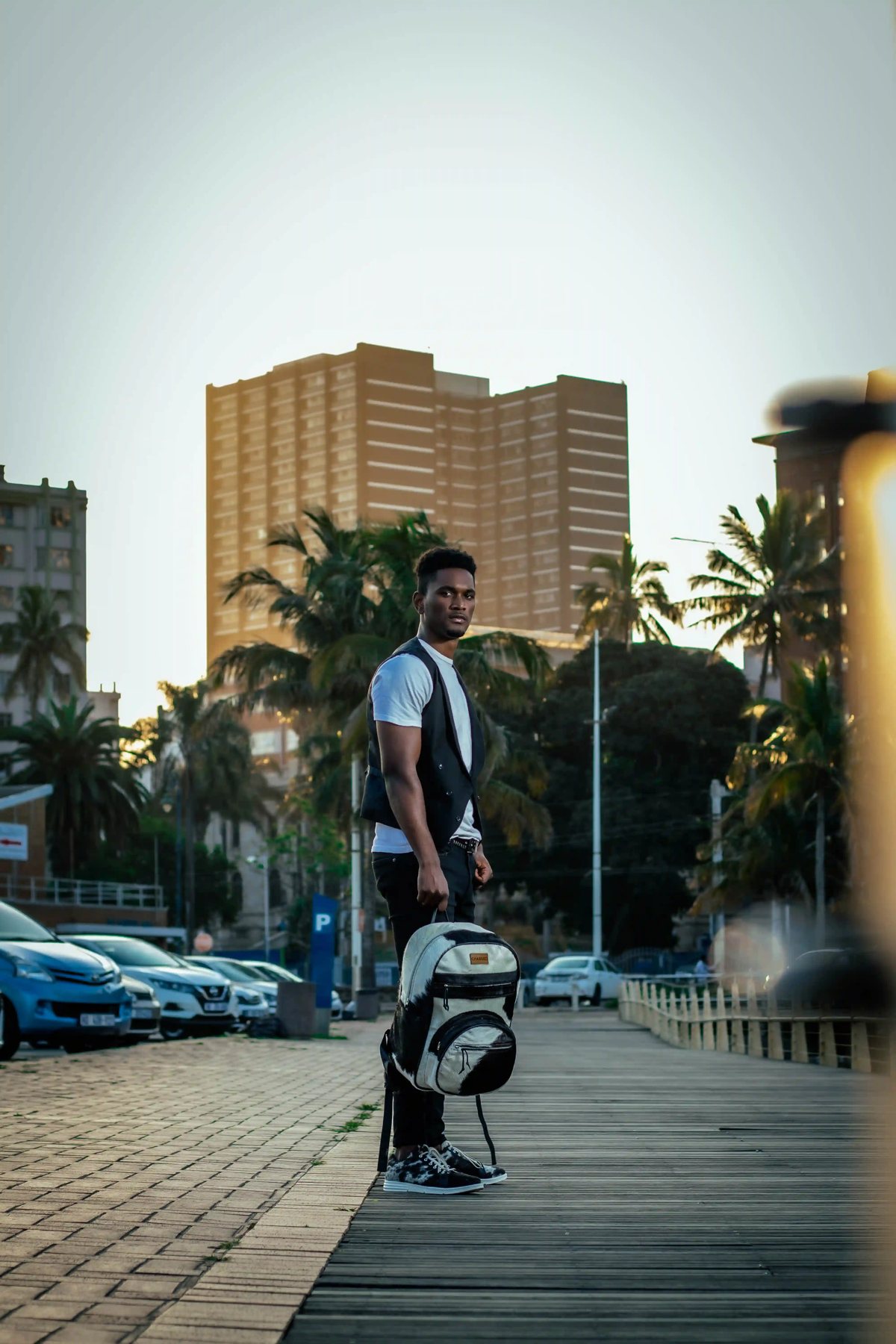
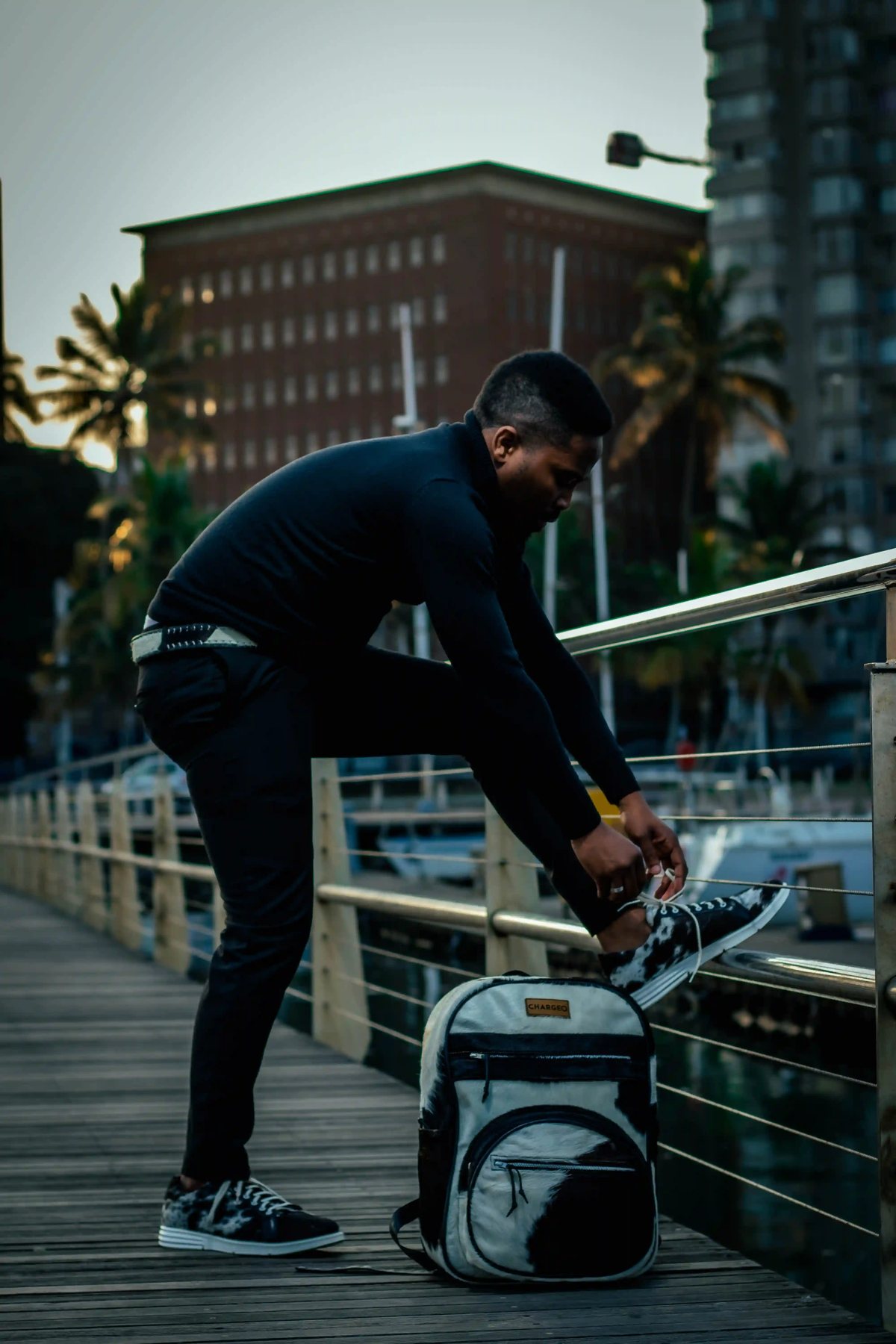
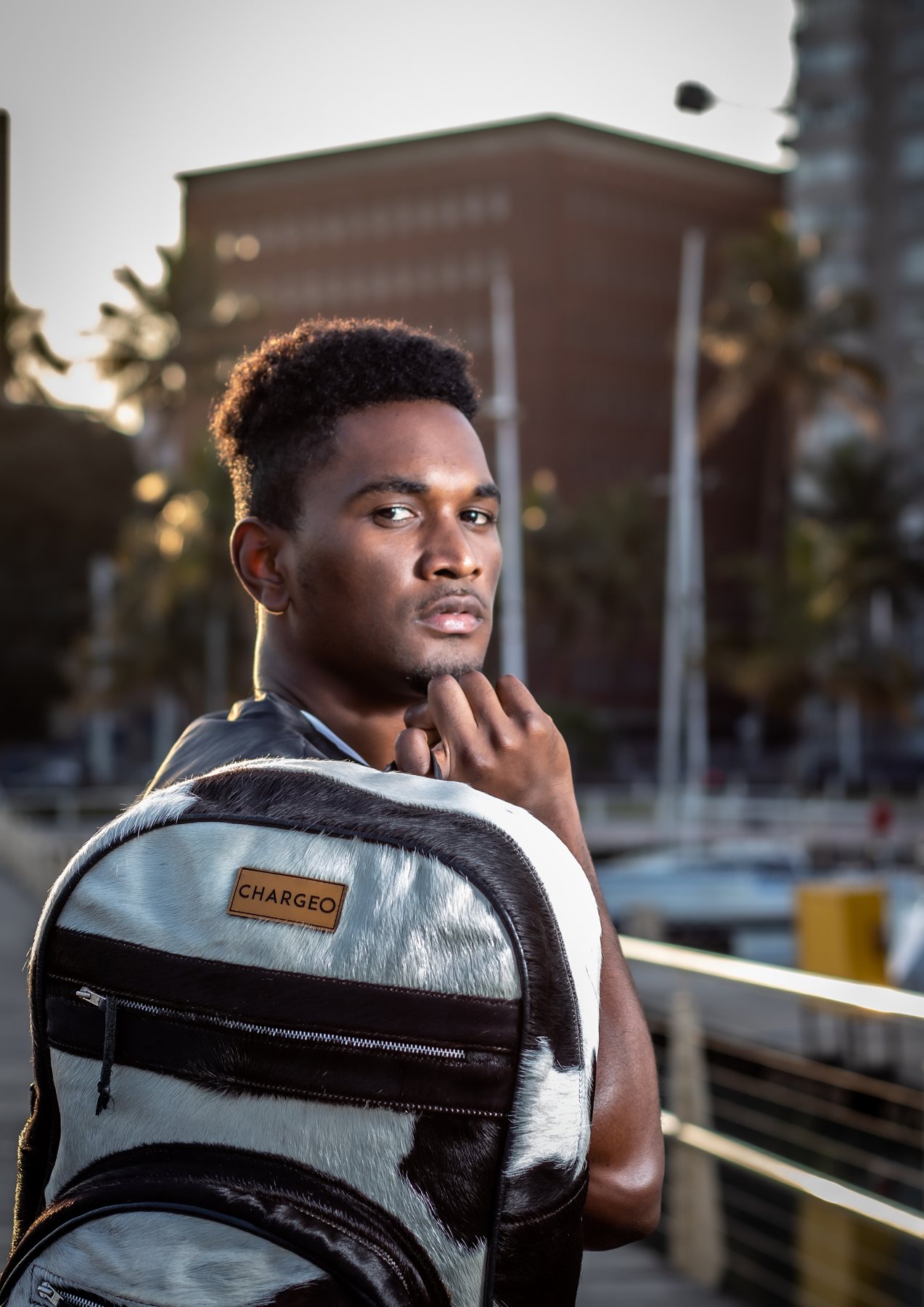
In August 2023 we photographed our black and white hide backpack on one model, first in a stone-walled garden, then at the marina. Set beside the 2021 pictures, they show the change: cleaner panels, straighter edges, and a hide that would become our signature.
Zulu Treasure
By the end of 2023 we had the first pieces of what is now the Zulu Treasure Collection: backpacks, belts and a sneaker in Nguni hide. The collection is named for the Nguni cattle that counted as wealth in the Zulu Kingdom. No two hides are alike, so no two Zulu Treasure pieces are alike. It became the signature collection of the house.

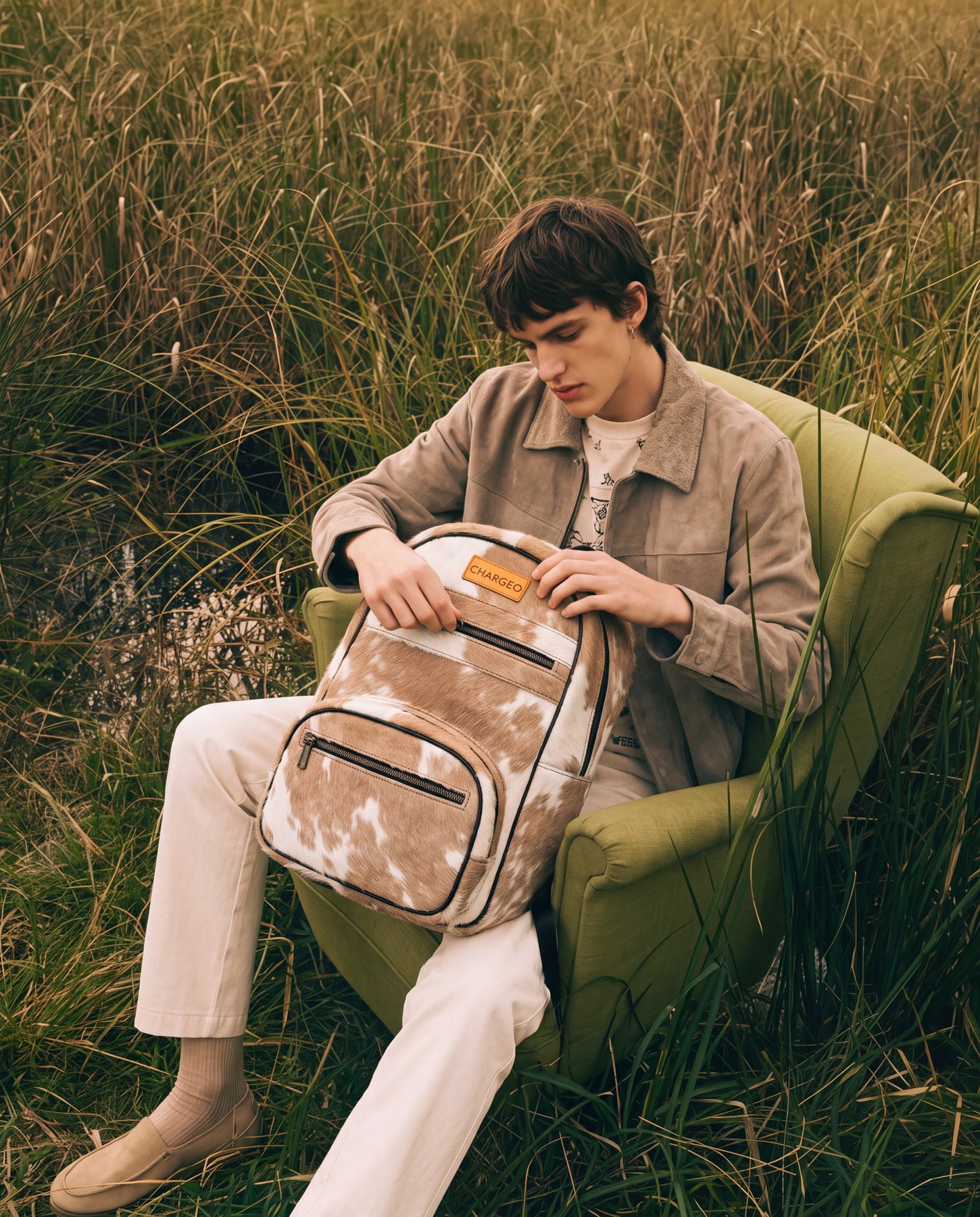
The harbour and the waterfront
In November and December 2023 we shot the collection again at the harbour and the waterfront, and in the studio on white: Sandton, Constantia, Pretoria, Hyde Park, Fourways, Morningside and more. Our backpacks still carry those names.
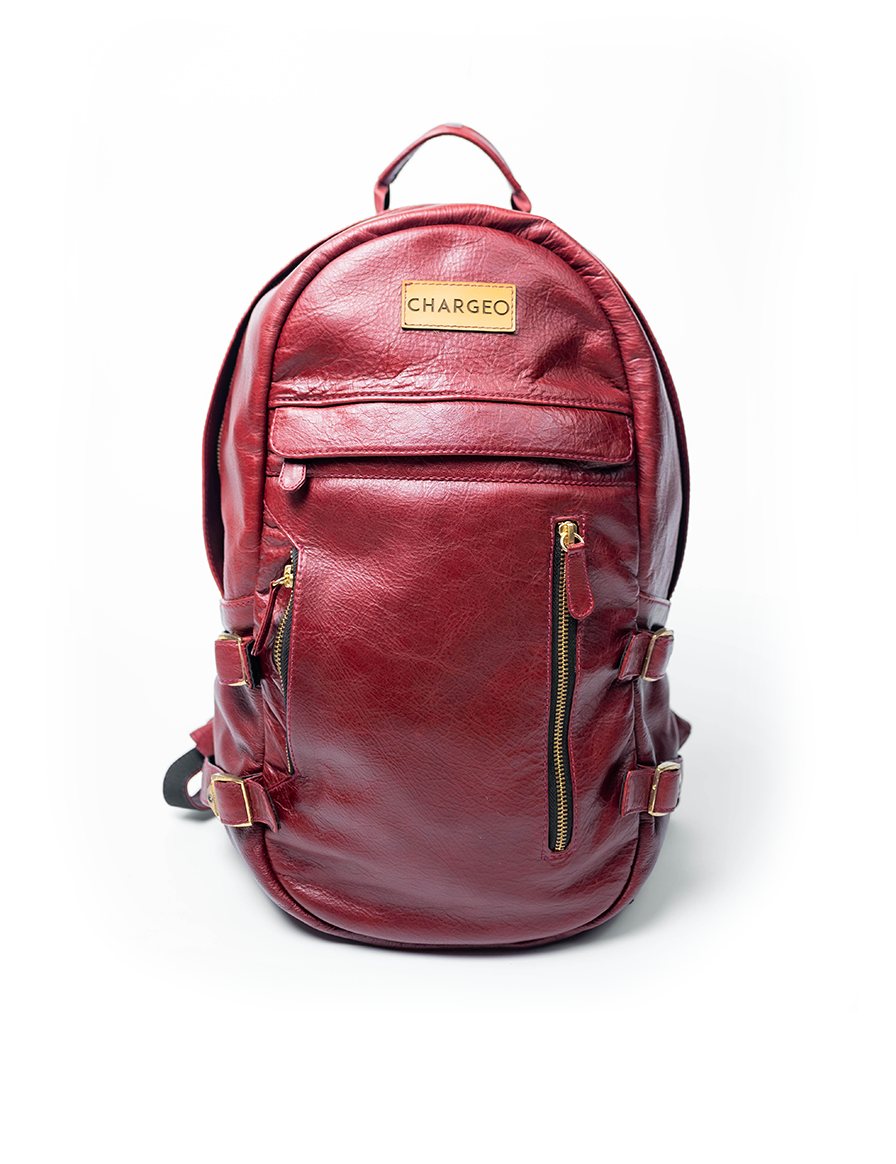


Before and after
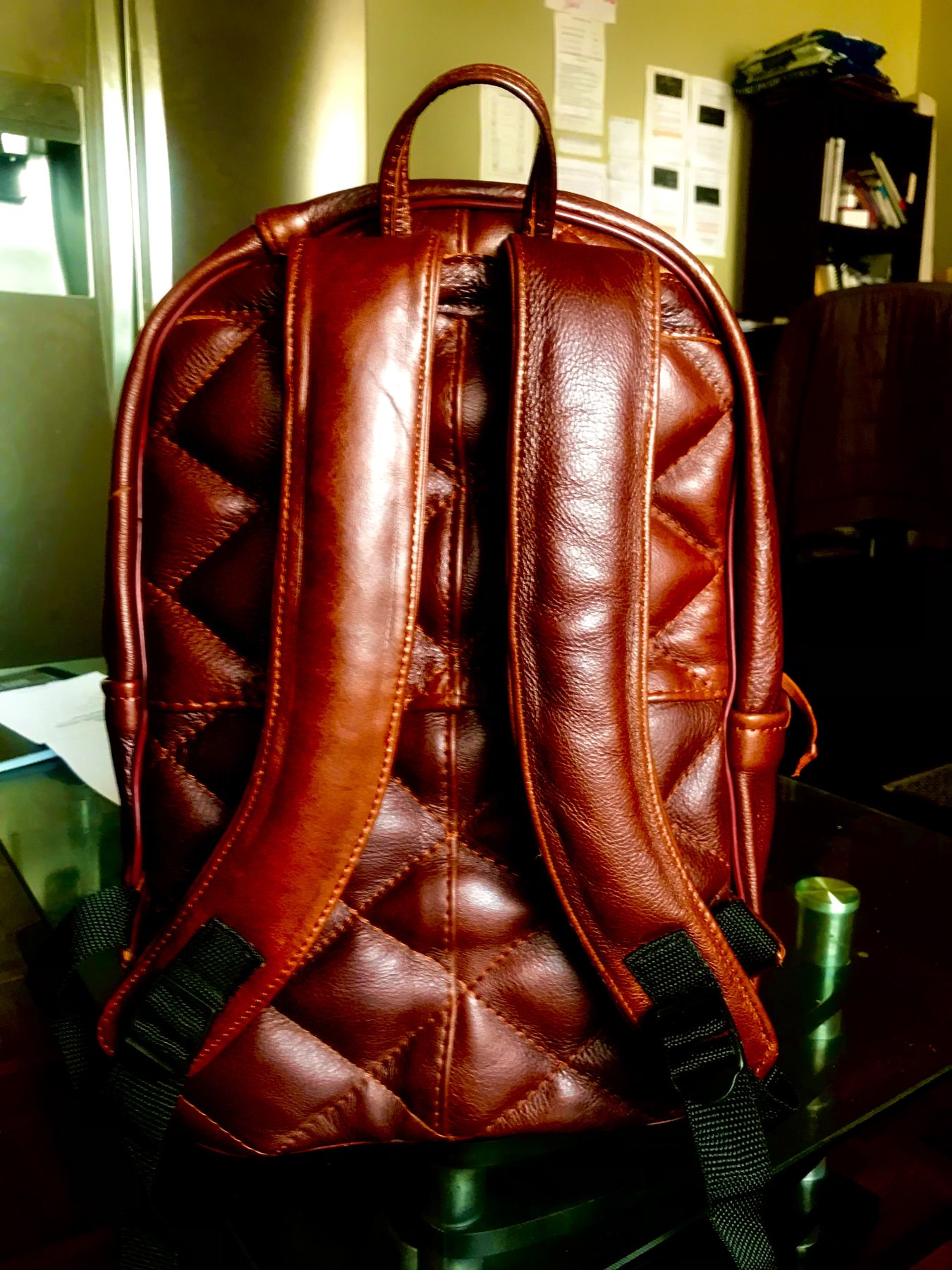
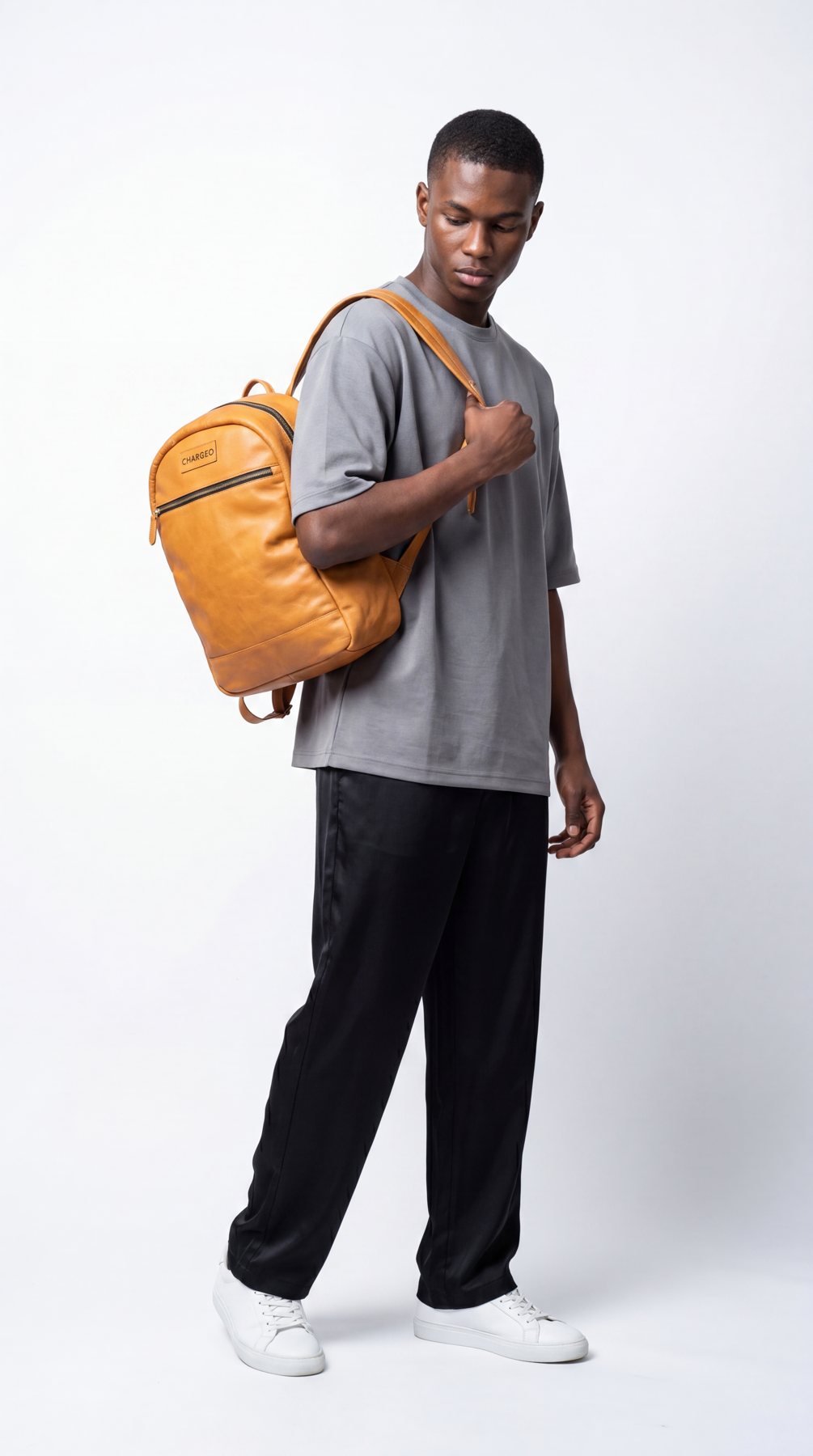
Chapter 5: Waste to Fashion and the turn to luxury (2024 and 2025)
Waste to Fashion
In February 2024 we applied to the Technology Innovation Agency‘s Grassroots Innovation Programme. We called our process Waste to Fashion: a way of designing, cutting and stitching that turns leather offcuts into finished pieces. The project was approved, and in July 2025 it began under the programme, with quarterly progress reports to the agency.
The 3Rs: Replenish, Re-use, Recycle
Over these years the process took its current name, the 3Rs. It covers sorting, treatment, pattern design and stitching, and it turns the irregular pieces left after cutting into finished leather pieces.
We still work this way. Our film from these years shows the process: offcuts collected, sorted, cleaned and made into leather bags.
The five-year plan
In 2021 we wanted to make leather goods for everyone. By 2025 we had settled on luxury. On 1 October 2025 we presented a five-year plan to our board with one aim: to make CHARGEO South Africa’s leading independent luxury leather house. Its first task was to perfect the pieces before growing the business.
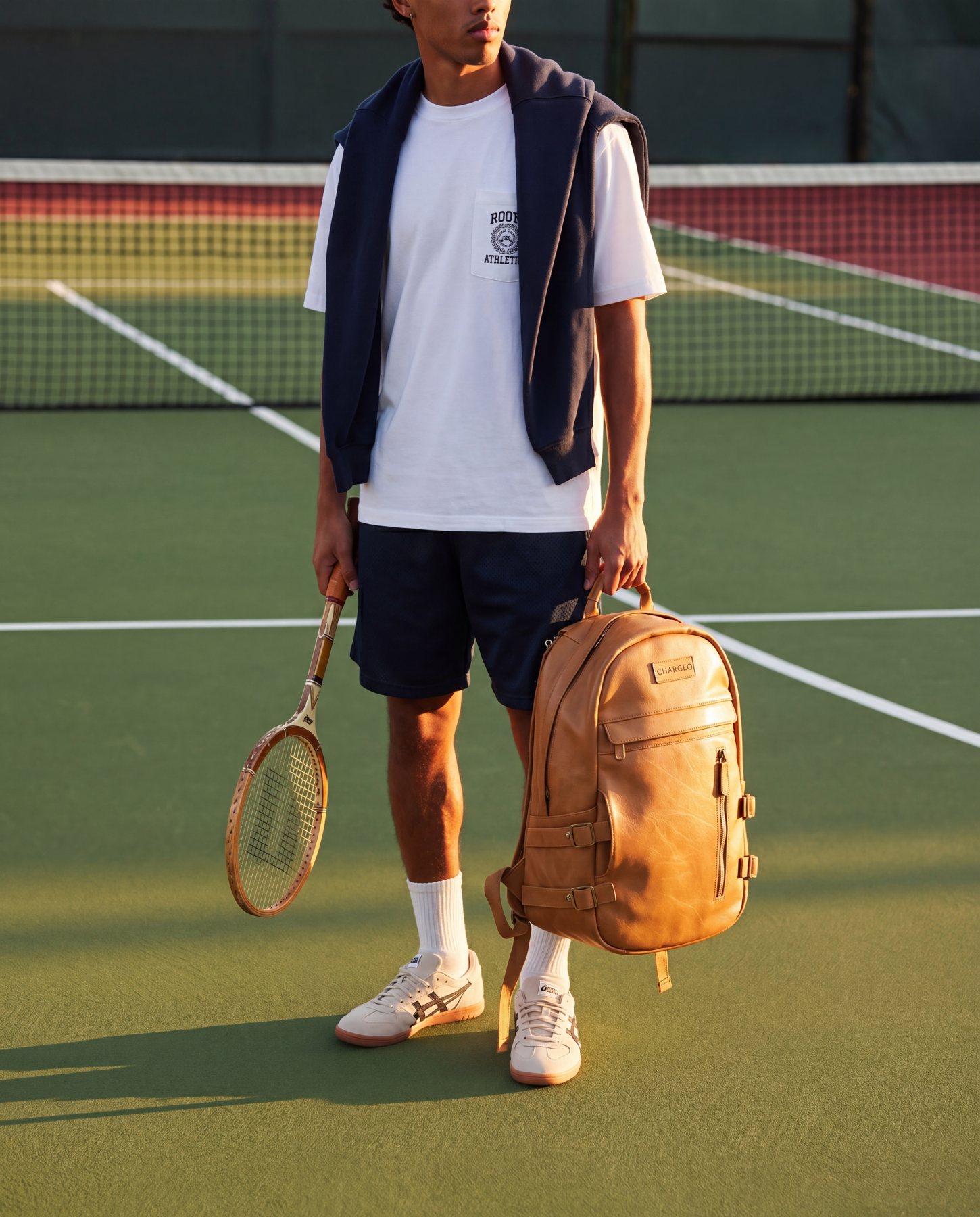
That meant fewer, better pieces, each made to order, in four leathers sourced in South Africa: full-grain bovine, ostrich, crocodile belly and Nguni hide.
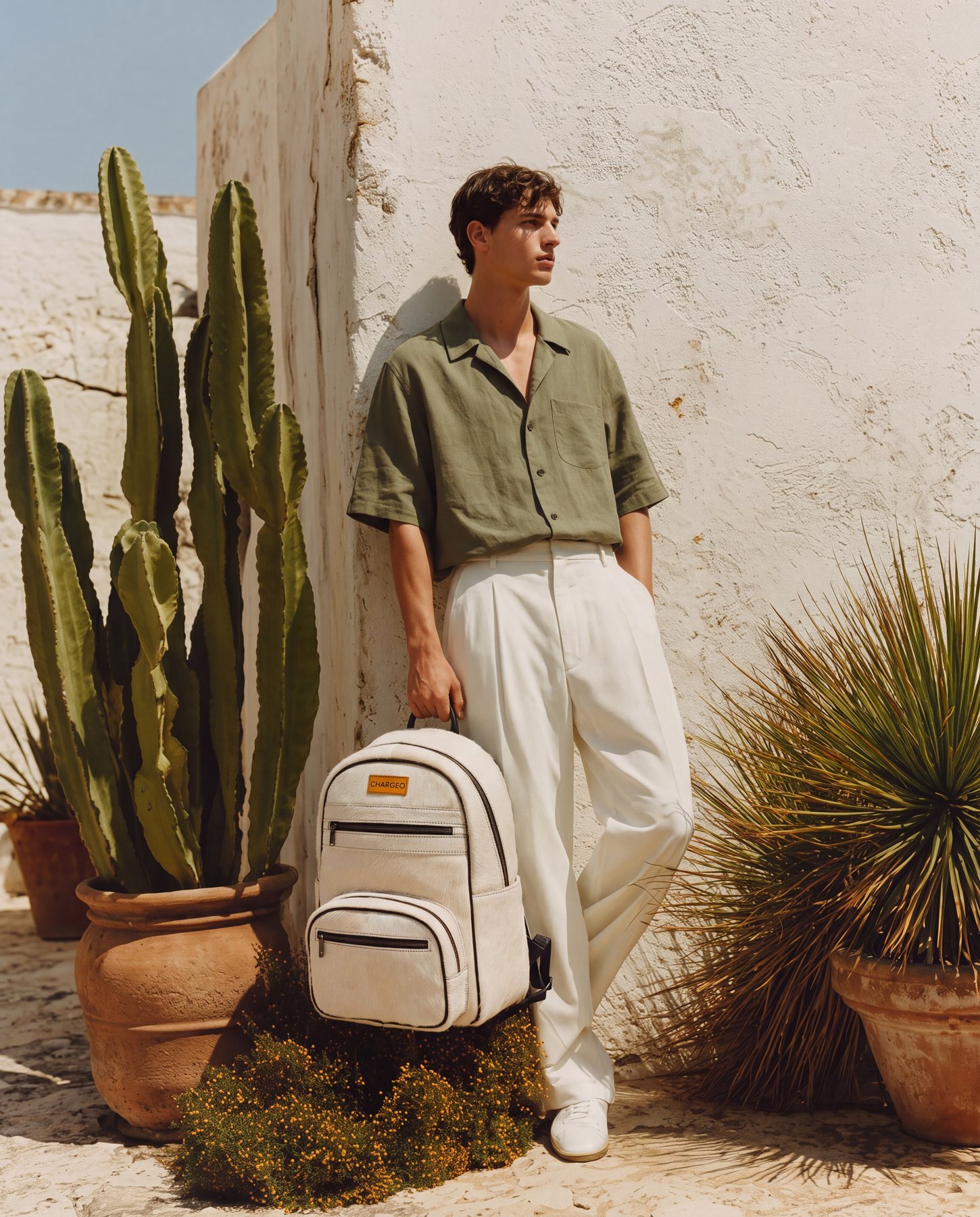
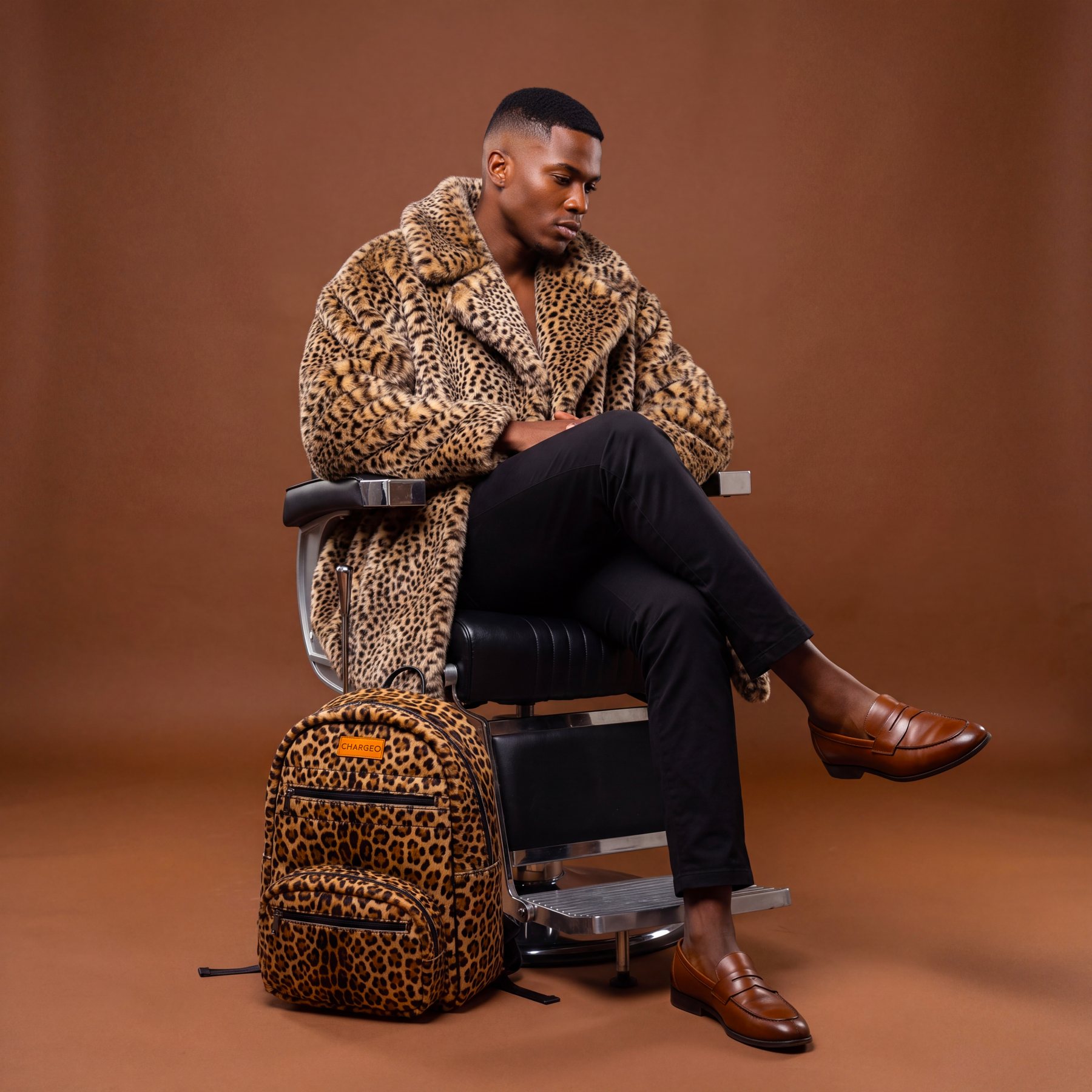
Before and after

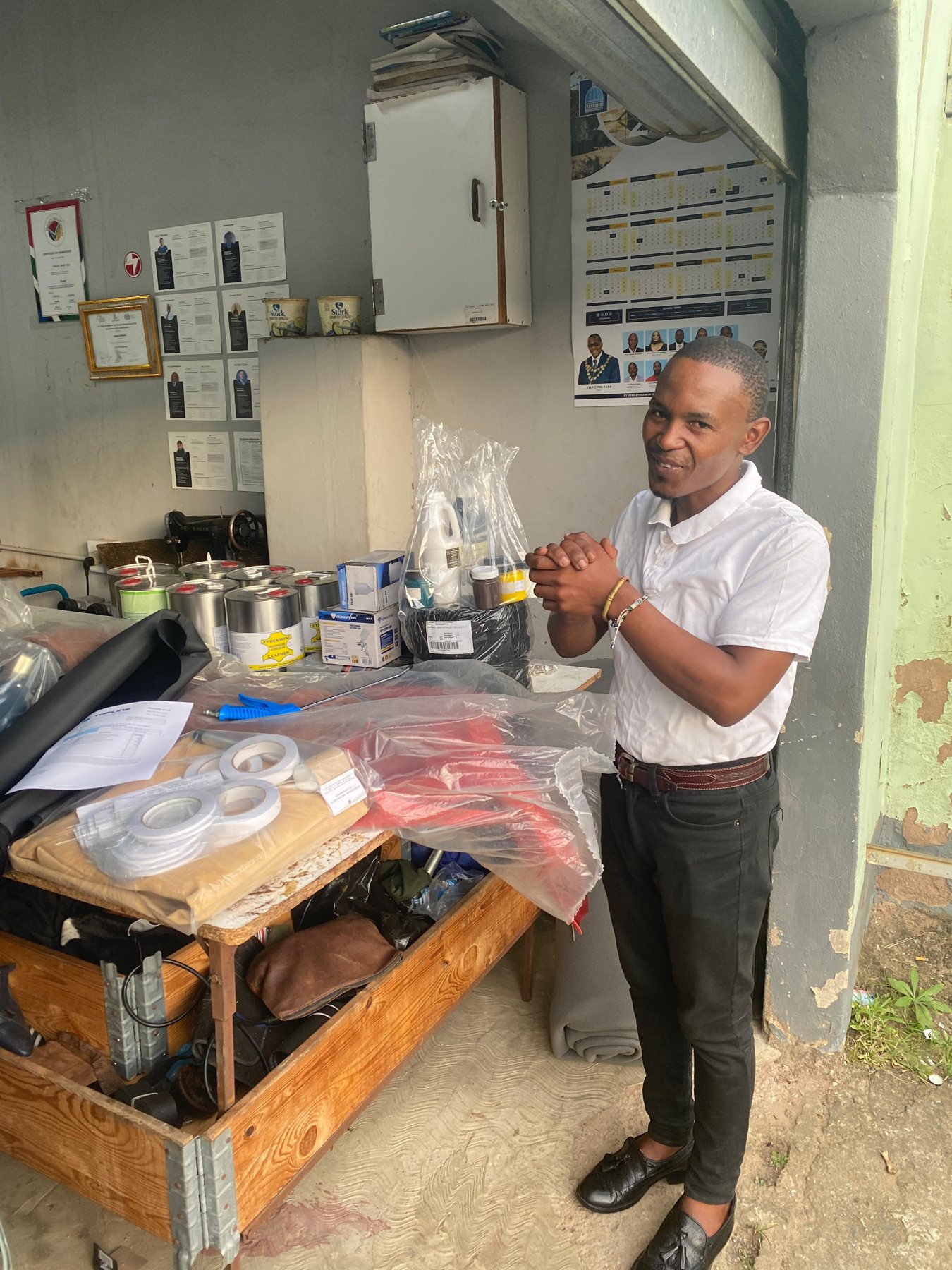
In 2025 Thabani stood in our workshop with new tools and materials received through Seda, now part of SEDFA.
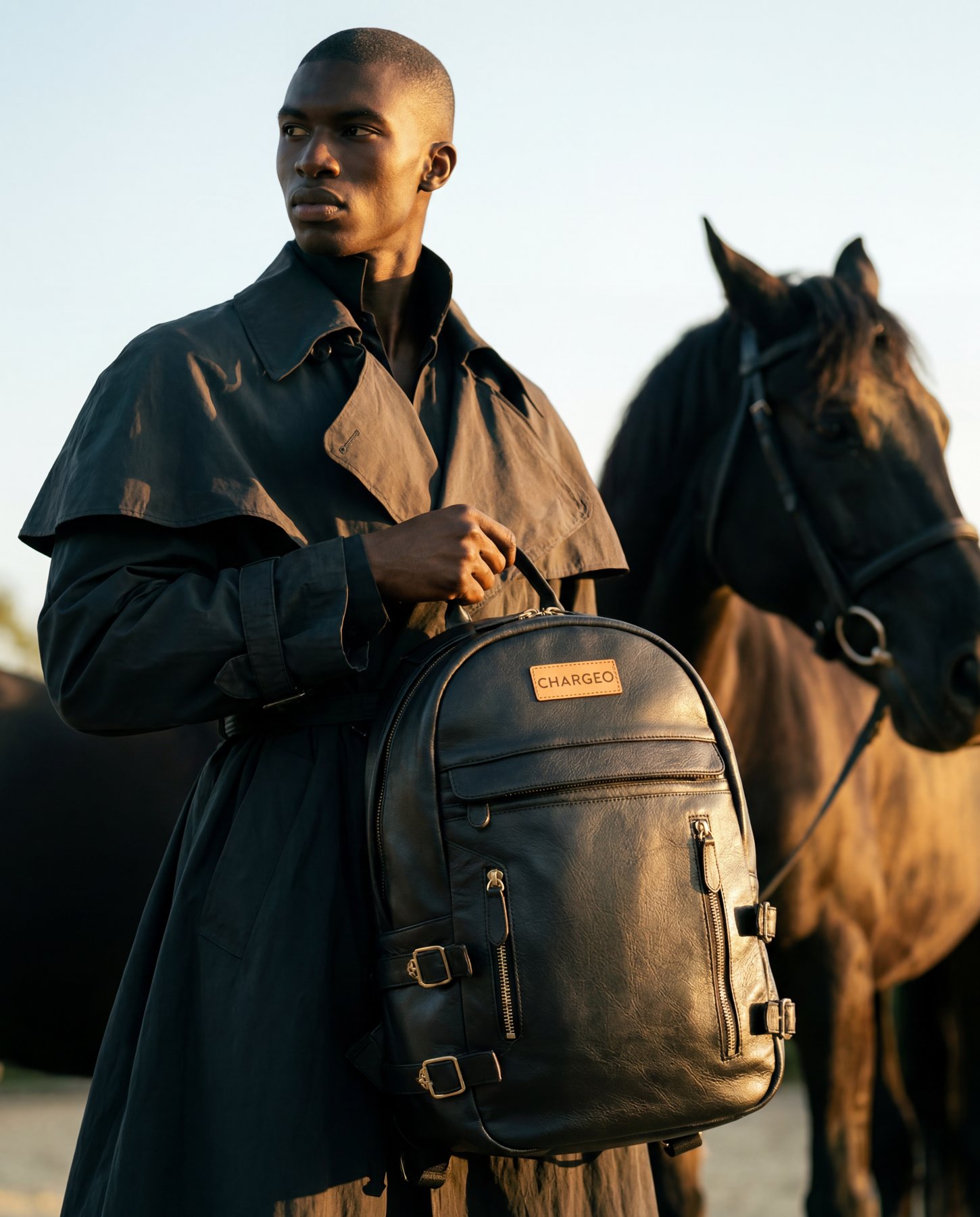
Chapter 6: Where we are today (2026)
We make leather backpacks, belts, a loafer and a sneaker, each made to order in South Africa. Each one arrives in a wooden box, wrapped in a white silk dust cover. See our packaging.
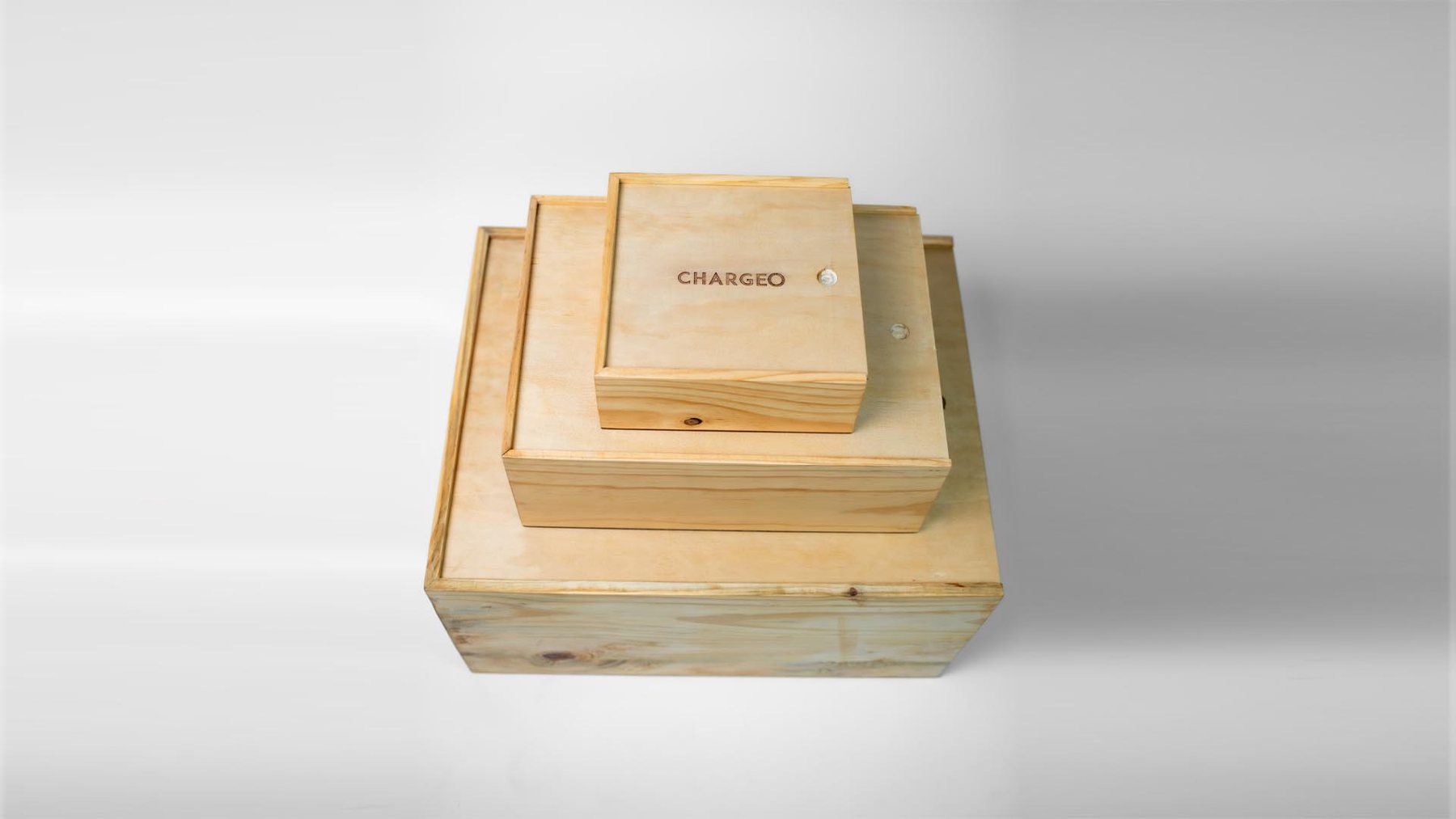
Chapter 7: What comes next
The house began with a backpack. It is growing beyond leather goods into fashion, one category at a time.
Eyewear
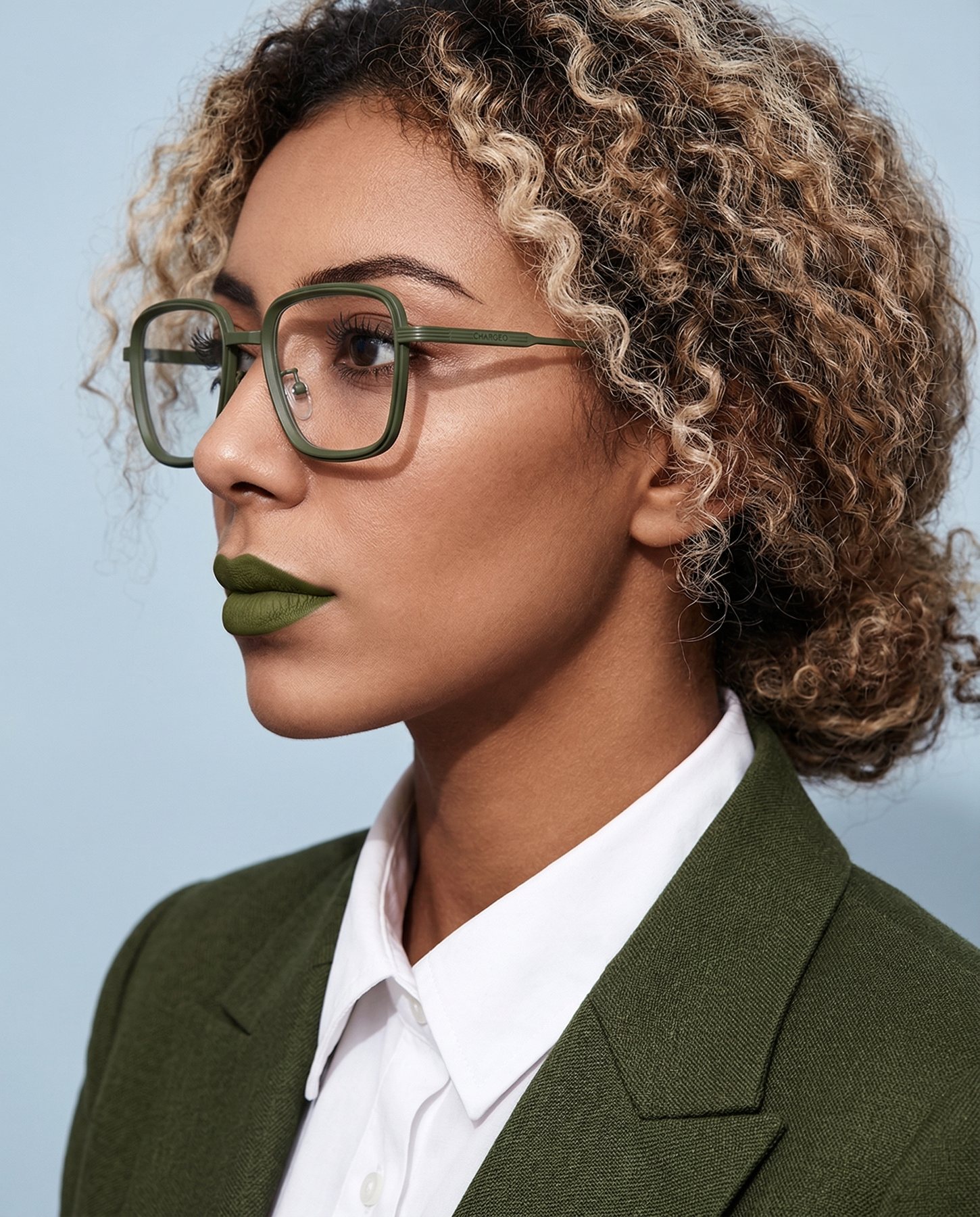
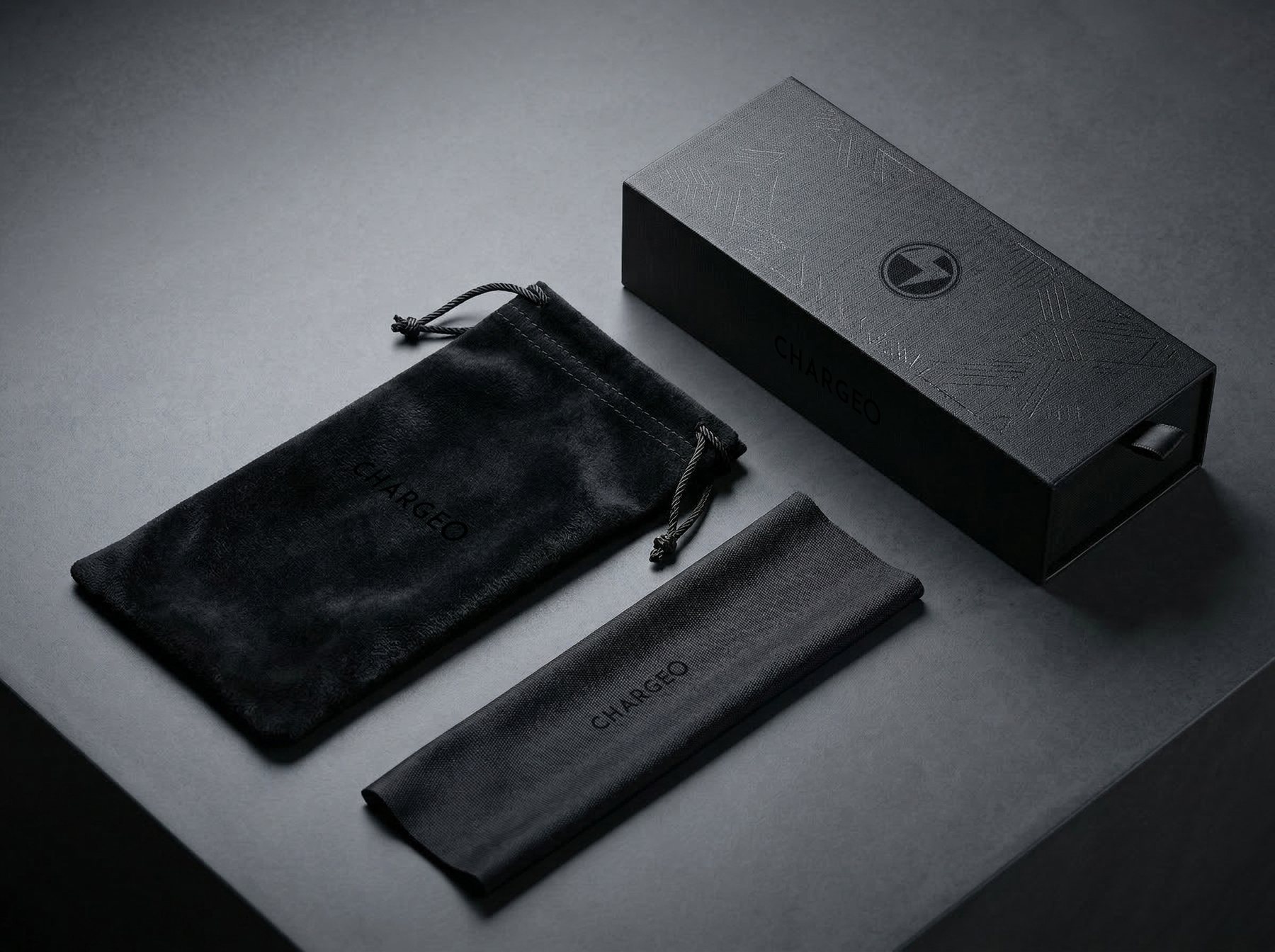
Our first eyewear line is on its way: four frames, from a bold rectangle to a soft rounded shape, each in the six colours of our leathers: Avocado, Butter Tan, Charcoal, Cognac, RedRuby and White. A frame can match the backpack you carry. Each pair comes in a CHARGEO case with its own sleeve.
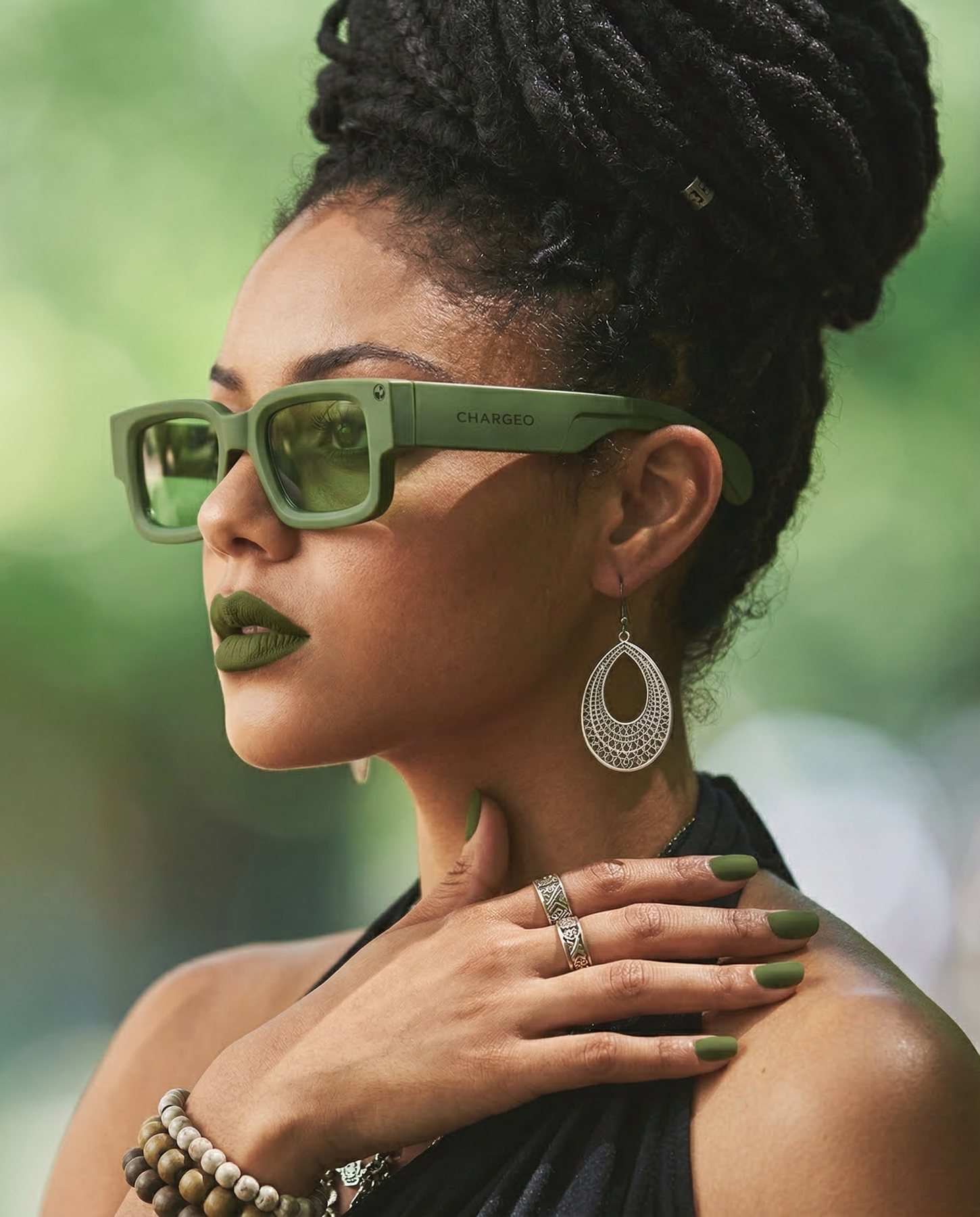
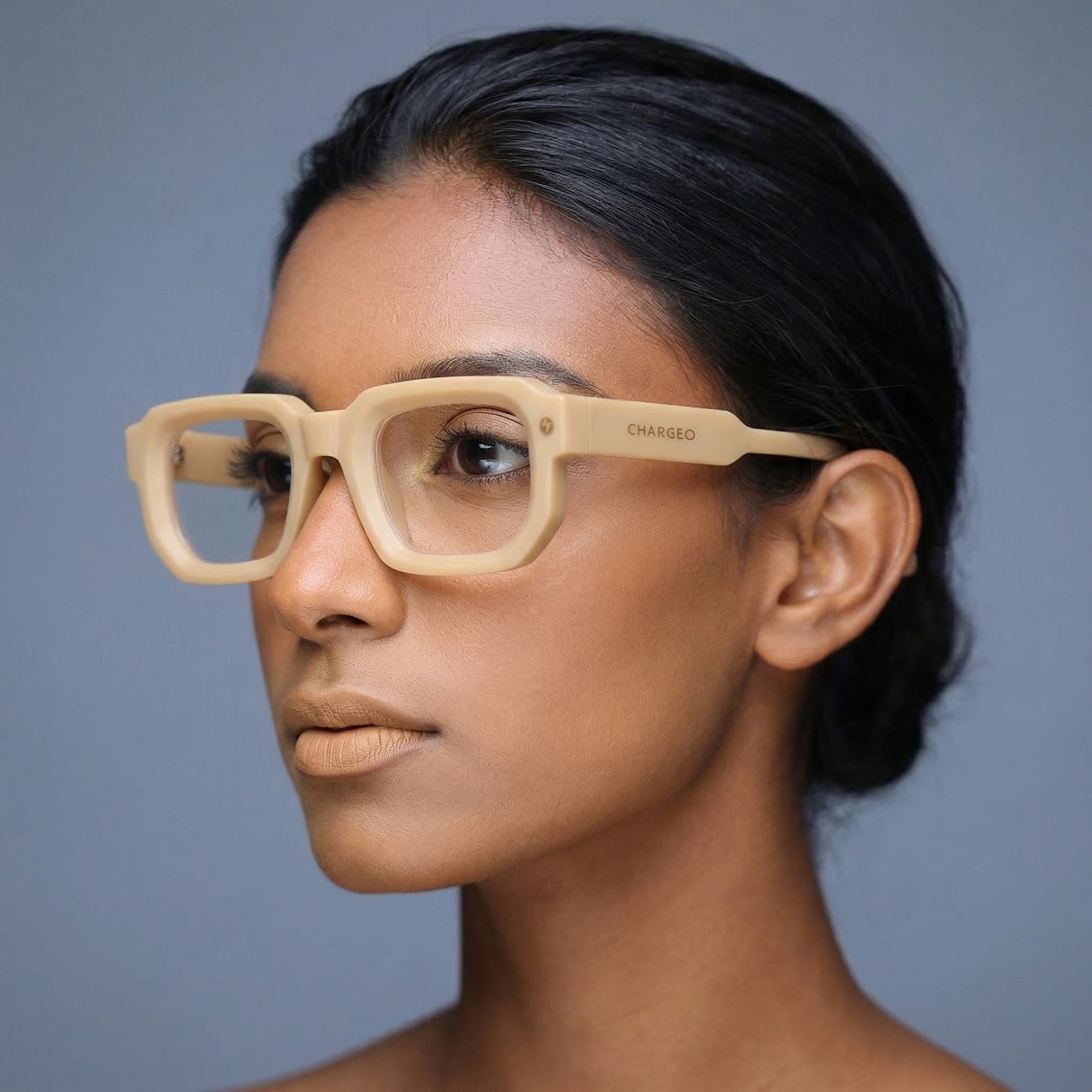
T-shirts and a leather bucket hat
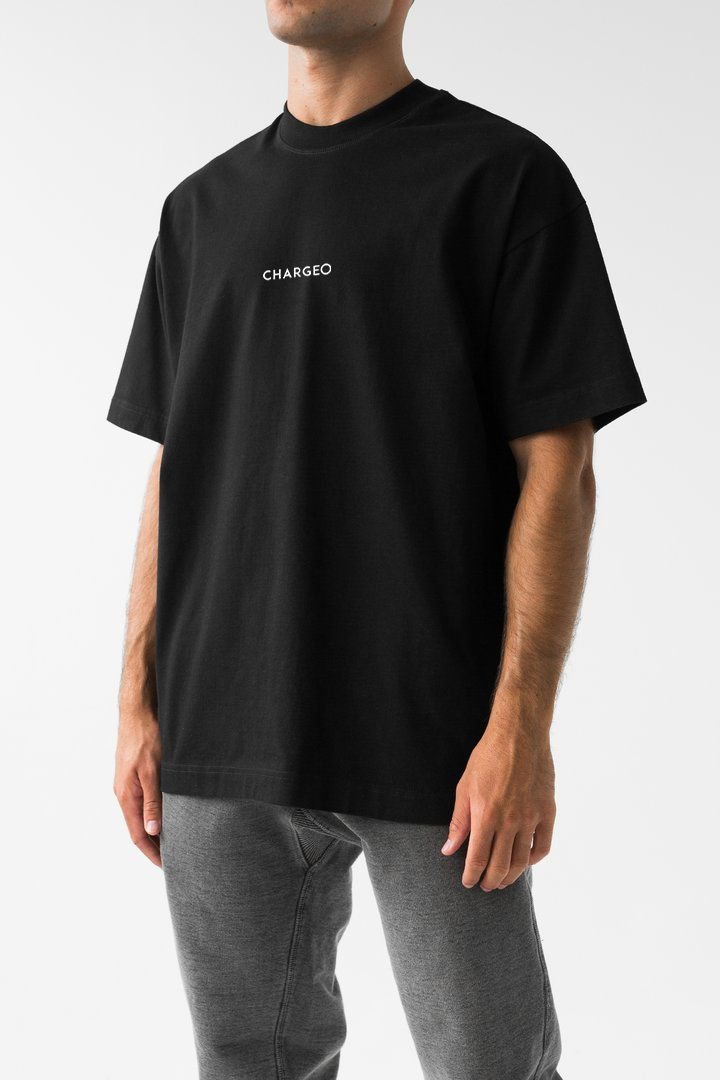
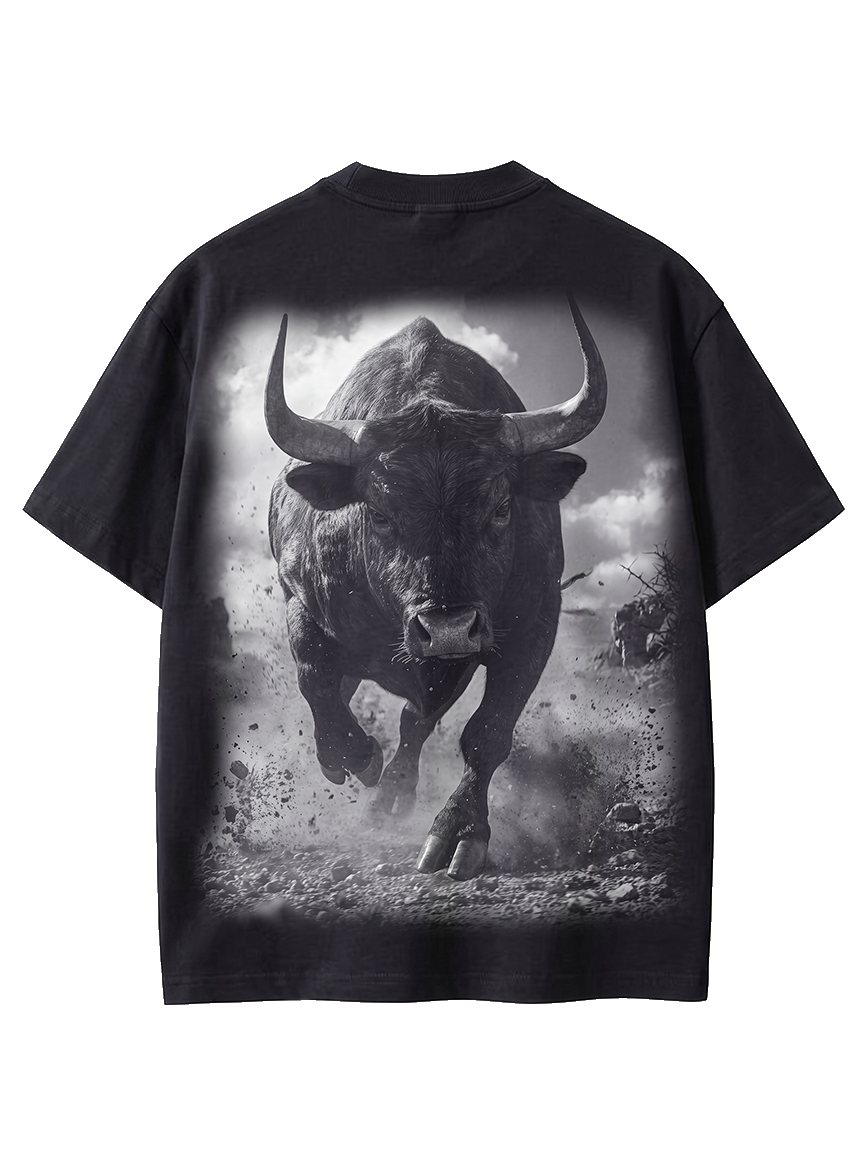
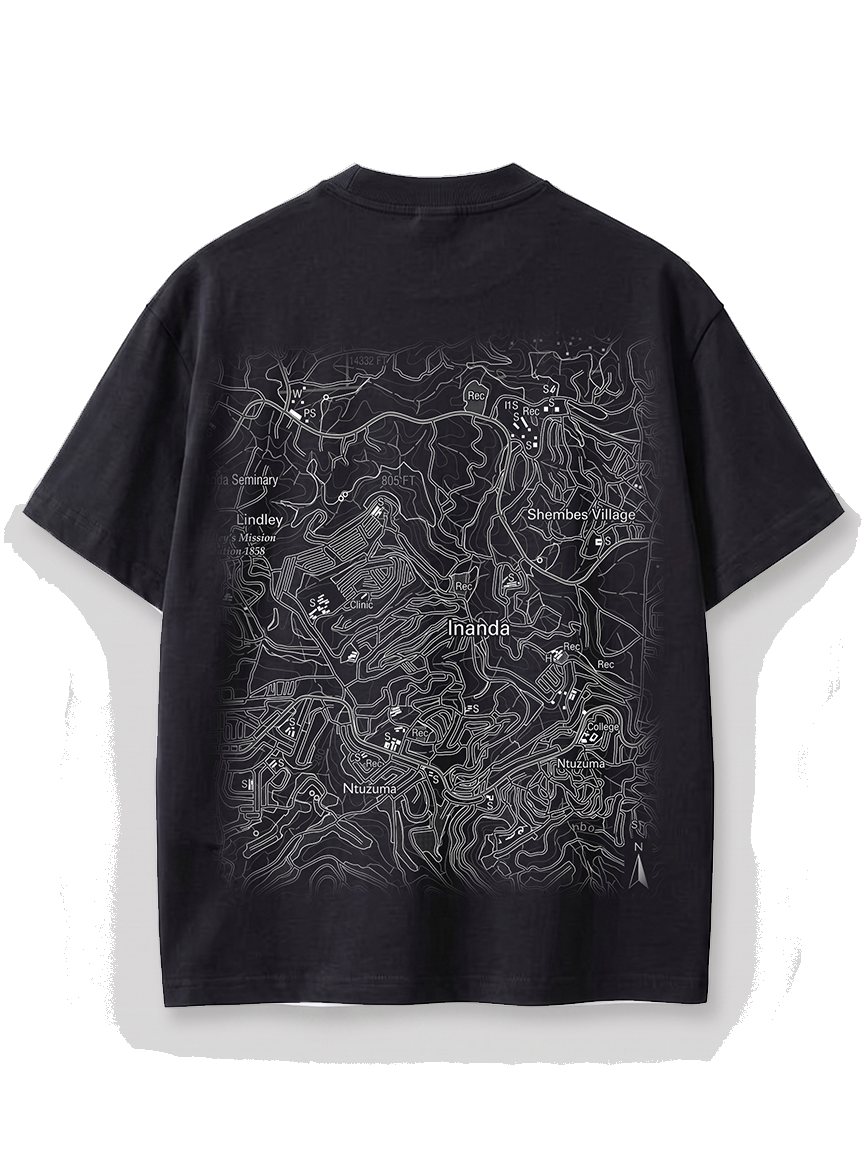
CHARGEO T-shirts come in black and in white, with the wordmark small on the chest. The back carries the artwork: a charging bull, a bull’s head, a standing Nguni bull, a lion, an eagle, and drawings of home, among them a map of Inanda and the Ohlange settlement where our story began.
A black leather bucket hat completes the line, in leather, as everything in the house is.
New work on the hide
We are developing new work on how each hide is used, so that more of every skin becomes a finished piece. We will share it when it is ready.
Mr Mngadi Senior is still part of the house. He has worked in leather since 1984. He leads our quality checks and trains the people who make our pieces.
View the CollectionRequest a Quote
For the press
| Name | CHARGEO™ |
|---|---|
| Founded | 23 March 2021 |
| Founders | Terrence Fumba (CEO) and Thabani Mngadi (Head of Production) |
| Ownership | Held in equal shares by the two founders |
| What we make | Leather backpacks, belts and shoes, made to order in South Africa |
| Price range | R3,500 to R22,150 |
| Signature collection | Zulu Treasure, in Nguni hide |
| Recognition | Third prize, GAP GREEN 2021, The Innovation Hub |
| Corporate clients | Durban University of Technology IT department; SEDFA |
| Delivery | Free in South Africa; more than 60 countries |
| Contact | info@thechargeo.com, 069 119 2954, contact page |
Questions, answered
Who founded CHARGEO? Terrence Fumba and Thabani Mngadi, in 2021. Terrence is CEO and Thabani heads production.
When was CHARGEO founded? The company was registered on 23 March 2021. The CHARGEO trademark followed in October 2022.
What does the name CHARGEO mean? It began as Thabani’s nickname. His father named him Turbo Charge after his turbocharged taxi, and the township made it Chargeo. For us it stands for the constant pursuit of excellence, and of looking good and feeling good.
What is the Zulu Treasure Collection? Our signature collection: backpacks, belts and a sneaker in Nguni hide, named for the Nguni cattle that counted as wealth in the Zulu Kingdom. No two pieces are alike.
Who makes CHARGEO pieces? Our pieces are made to order in South Africa under Thabani Mngadi, our Head of Production, with Mr Mngadi Senior, who has made shoes since 1984.
What are the 3Rs? Replenish, Re-use, Recycle. It is our own process for leather offcuts and covers sorting, treatment, pattern design and stitching.
Has CHARGEO won any awards? The Innovation Hub named CHARGEO third prize winner of GAP GREEN 2021, its competition for work that reduces waste.
Where is CHARGEO from? CHARGEO is a luxury fashion house, born in South Africa.
