


Leather bag repair can restore stitching, zips, straps, fittings, scuffed corners and faded colour. Deep cuts, ink and leather that has dried and cracked are harder, and some cannot be reversed. The sections below set out what a repairer can do, what you can try at home, and how our repair service works for the pieces we make.
Can a Leather Bag Be Repaired?
Yes. Most faults on a leather bag can be repaired, because the bag is sewn from separate panels and fittings. A repairer can restitch a seam, replace a zip or fit a new strap without touching the rest of the bag.
Damage to the surface of the leather itself is harder to repair.
What Can and Cannot Be Repaired on a Leather Bag?
Seams, zips, straps and fittings can usually be repaired. Deep damage to the leather usually cannot be made invisible.
| Fault | Can it be repaired? | What a repairer does |
|---|---|---|
| Loose or broken stitching | Usually | Restitches the seam through the original holes |
| A broken zip | Usually | Replaces the slider or the whole zip |
| A worn strap or handle | Usually | Remakes or replaces the strap |
| Buckles, rings and studs | Usually | Fits new hardware |
| Scuffs and faded colour | Often | Cleans, recolours and conditions the panel |
| A torn lining | Usually | Patches or replaces the lining |
| A deep cut in the leather | Sometimes | Fills or patches it. The repair may show |
| Ink and old grease stains | Rarely | Can be reduced. Often cannot be removed |
| Dried, cracked leather | Rarely | Conditioning softens it. Cracks stay |
Ask a repairer for a photo of similar work before you agree to a price.

What Does Each Type of Leather Bag Repair Involve?
Each leather bag repair is a separate job, and what it involves tells you what to ask before you agree to it. The table above names the work. These are the questions I would put for each.
- Restitching. The seam is sewn again through the original holes. Ask whether the thread will match the original in colour and thickness, and whether the whole seam or only the loose part will be redone.
- A zip. The repair is either a new slider or a whole new zip, so ask which of the two your bag needs. I would expect a whole zip to mean opening the lining and the seam around it. Find out, too, whether the new zip will match the old in metal, colour and width.
- A strap or handle. It may be restitched where it joins the bag, or remade in new leather. Ask how the new leather will be matched to leather that has aged, and whether both handles should be remade so that they agree.
- Edges. Where the painted edge of a strap or flap has cracked or peeled, ask whether the whole edge or only the damaged length will be refinished.
- Recolouring. The panel is cleaned, recoloured and conditioned. Have the colour tested on a hidden part first. New colour sits over the patina the leather has built up, so ask as well whether the feel or the sheen will change.
- Relining. A lining is patched or replaced. Find out which fabric will be used, and whether the pockets and any label will be moved across.
- Hardware. New buckles, rings, studs, feet or clasps are fitted. Ask whether all the matching fittings should be changed together so that the metal agrees, and ask for the old parts back.
Can You Fix Scratches on a Leather Bag Yourself?
Yes, a light scratch on full-grain leather can often be eased at home. Rub it gently with a clean fingertip, then work in a small amount of leather conditioner and buff it with a dry cloth.
I would stop there and not use glue, shoe polish or a colour pen on a good bag, because each makes a later repair harder. Our guide on how to clean a leather bag covers conditioning.
Leather bag repair drew between 30 and 70 searches a month in South Africa through the year.
Searches for Leather Bag Repair
Searches a month, September 2025 to August 2026
- Searches for “leather bag repair”
What Should You Not Try to Repair Yourself?
Do not attempt anything at home that pierces, glues, heats or colours the leather, because none of those can be undone.
A few jobs are safe. You can polish a dull bag by conditioning it lightly, waiting an hour and buffing it with a clean, dry cloth. The sheen comes from the buffing. You can wipe fittings with a dry cloth, and you can tighten a stud that has a screw back, with a hand behind it so that the screwdriver cannot slip into the leather.
The rest I would leave to a repairer, for these reasons.
- Glue. Household glue can dry hard and show at the edge of a lifting corner or a peeling strap. It then has to come out before the real repair can begin.
- A needle and thread. A sewing needle from the drawer makes new holes beside the old ones. If a thread has come loose, do not pull it and do not cut it flush. Photograph it and leave it.
- Scissors. Trimming a frayed strap or a curling edge removes leather that the repairer may need.
- Heat. An iron or a hairdryer used to flatten a crease dries the leather.
- A new zip. The lining has to be opened to fit one.
Should You Repair a Leather Bag or Replace It?
Repair a leather bag when the leather itself is sound and the fault lies in a part that can be changed. Replace it when the leather has failed across the bag.
I would make three checks, in this order.
- The leather. Bend a panel gently. If it flexes without cracking, I would treat the leather as sound, and everything attached to it can be renewed. Leather that cracks across several panels, or a coated surface that is peeling, will in my view go on failing after the repair.
- The number of faults. One or two faults make a repair. A bag that needs a lining, zips, handles and colour is being rebuilt, so ask for one written quote for the whole job before you agree to the first part.
- What a replacement would take. Set the quote beside what you would plan to spend on a bag of the same standard.
The table is a way to think about that third check. It gives no repair prices, because only a repairer who has seen the bag can quote one. The bands are what you would plan to spend on a replacement.
| What you would plan to spend on a replacement | How I would think about it |
|---|---|
| Under R500 | Have a quote for a small fault only. If the bag needs more than that, I would put the money towards its replacement |
| R500 to R1,500 | Seams, zips and fittings are worth a quote. Think twice before relining or recolouring |
| R1,500 to R3,500 | Any single fault is worth a quote |
| R3,500 to R10,000 | Lean towards repair, and ask the maker first |
| Above R10,000 | Repair nearly everything while the leather is sound |
Money is one test among several. A bag you would not want to part with is worth a quote in any band, and keeping it in use is also the choice I would make on environmental grounds. Our page on whether leather is sustainable gives the reasoning.

What Decides the Cost of a Leather Bag Repair?
The fault decides the cost of a leather bag repair, so a repairer should quote after seeing the bag or a clear photo. A new zip slider is a small job. A remade strap or a recoloured panel takes hours of work.
Ask for the quote and the timeline in writing before you send the bag.
How Do You Choose a Leather Bag Repairer?
Choose a leather bag repairer by the work they can show you on bags like yours, and begin with the maker of the bag.
The maker has the patterns, the leather and the fittings, so ask there first and check whether the fault falls under a guarantee. We repair only the pieces we make, and for a bag from any other house its own maker is the first call. If that maker does not repair, look for someone who works on bags and small leather goods. A shoe repairer may do the job well, but I would want to see a bag they have repaired.
Before you leave a bag with anyone, settle these points.
- See photographs, before and after, of the same repair on a similar bag.
- Find out who will do the work, and whether it is done on the premises or sent elsewhere.
- Ask how the thread, zip, leather and metal will be matched.
- Agree what you owe if the bag is opened and the repair proves impossible.
- Establish who is responsible for the bag while it is in the workshop.
- Get a date. I give no usual time here, because it depends on the job and on the queue.
Then ask for the quote in writing. It should state the following.
- The work. Each job listed and priced separately, so that you can agree to some and decline others.
- The materials. The zip, the thread, the leather and the fittings to be used, and how closely they match the originals.
- The price. A total, and what it includes. Courier costs in each direction should be shown, with who pays them.
- The limit. A line saying that no further work will be done without your agreement.
- The result. In plain words, what you should expect: that a patch will show, or that a recoloured panel will not match its neighbours exactly.
- The guarantee. Whether the repair itself is covered, and for how long.
A quote given from a photograph is an estimate, so have it confirmed once the bag is on the bench. Photograph the bag in front of the repairer, and leave with a receipt that describes it and the work agreed.
How Do You Pack and Send a Bag for Repair?
Send a bag for repair empty, photographed, filled and boxed, with a note inside that says who you are and what is wrong.
- Empty every pocket, and check the small ones twice.
- Photograph the whole bag and each fault in daylight. Keep the photographs until the bag is back.
- Mark each fault with a paper tag tied to the nearest handle or ring. Do not put tape or a sticker on the leather.
- Fill the bag with plain paper so that it keeps its shape, and put it in its dust bag.
- Choose a box larger than the bag, so that the bag is not folded, and pad every side.
- Send the detachable strap as well if any colour or metal is to be matched.
- Put a note in the box with your name, your telephone number, the work agreed and the reference on the quote.
- Use a courier that tracks the parcel and takes a signature, and keep the waybill.
Agree on the return before you send: who books the courier, who pays, and to which address the bag comes back. Ask the repairer, too, what cover the parcel has in transit, and add your own if the answer does not satisfy you.
How Does Our Repair Service Work?
We repair only the pieces we make. Send us a photo and a short note, and our workshop will tell you what can be done.
- Tell us. Say which piece it is and what needs doing, and attach a photo.
- We assess. We confirm what can be done, with a quote and a timeline for that piece.
- We restore. Our workshop repairs and conditions the piece.
- It returns to you. We send the piece back ready to carry again.
Each of our leather backpacks carries a guarantee of three years on the stitching and thread and five years on the hide. Tell us if your piece is within that time.

How Do You Prevent Each Common Fault on a Leather Bag?
You prevent each common fault on a leather bag by removing its cause, and there are five I look to: weight, force, friction, sun and neglect. The table pairs each fault with the cause I would suspect first.
| Fault | What I would suspect | How to prevent it |
|---|---|---|
| Stitching that breaks where a handle joins | A heavy load, or lifting a full bag by one handle | Carry less, and lift by both handles or by the top |
| A zip that splits or sticks | Closing it over a bag that is too full, or forcing it | Hold the two sides together with one hand and close with the other |
| Edge paint that cracks | Sharp bends in a strap, and rubbing against a buckle | Store straps unbuckled and loosely coiled |
| Scuffed corners | Floors, pavements and car boots | Set the bag down on clean, dry surfaces, base first |
| Faded colour | Sun through a window or a windscreen | Keep the bag in a cupboard between uses |
| A torn lining | Loose keys and uncapped pens | Keep keys in a pouch and pens capped |
| Loose or tarnished fittings | Pulling on the fitting, and damp | Check screws each month and dry the metal after rain |
| Leather that dries and cracks | Heat, and years without conditioner | Condition lightly two or three times a year |
Give the last row the most attention. Cracks in dried leather stay, as the table of repairs higher up this page shows, and our leather care guide sets out the conditioning that keeps a bag from reaching that point.
How Do You Avoid a Repair?
Overfilling and damp storage cause many repairs. Carry less than the bag can hold, rest it between uses and keep it in its dust bag.
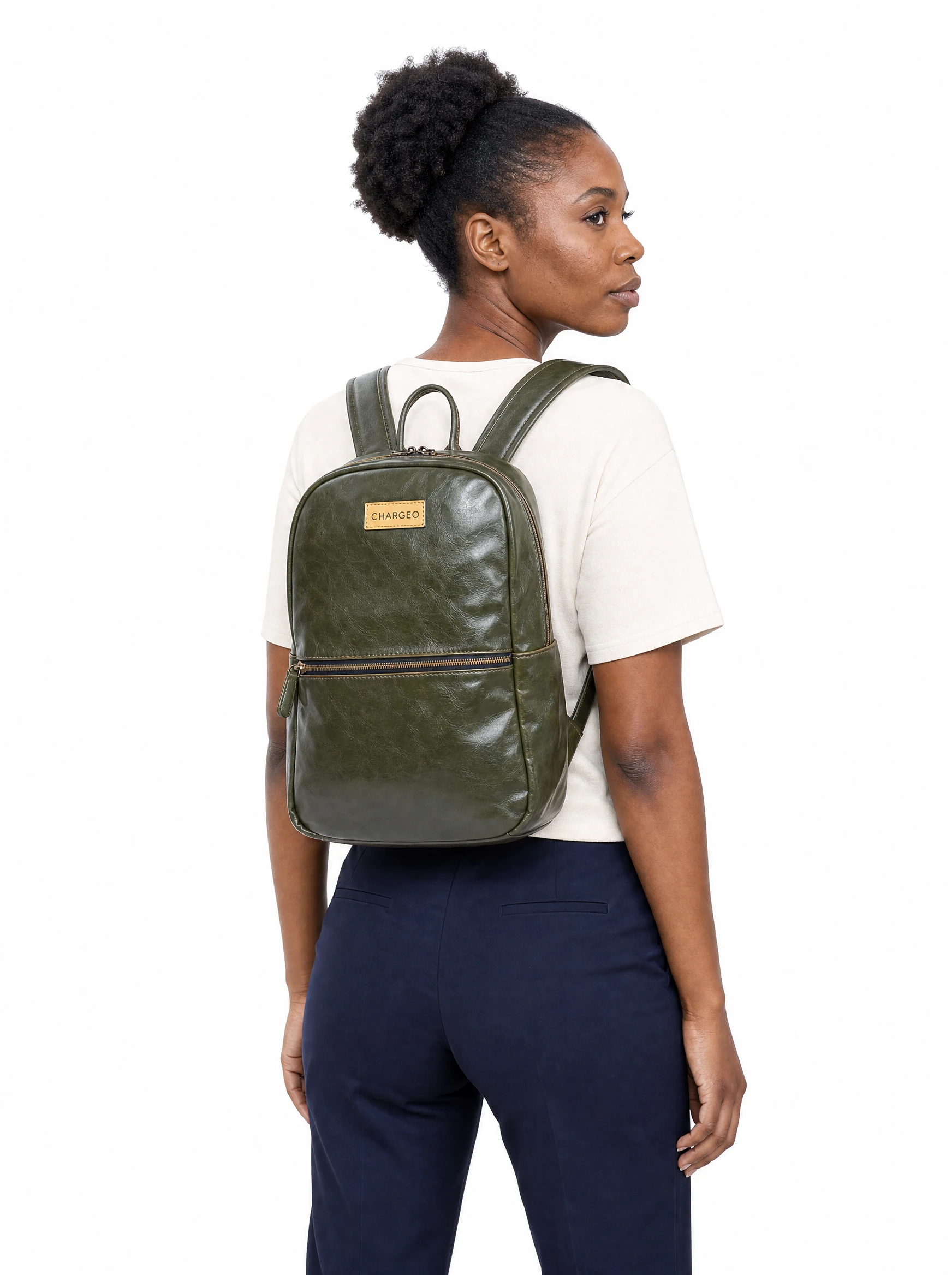
If the bag is caught in rain, dry it properly. Our article on how to dry a wet leather bag explains how. The full guide to choosing a leather backpack covers the construction to look for when you buy. See all our leather backpacks.



More on Leather Backpacks
Questions, Answered
What can be repaired on a leather bag?
Stitching, zips, straps, fittings, linings and scuffed colour can usually be repaired. Deep cuts, ink and cracked leather are harder.
Can a cracked leather bag be repaired?
Rarely in full. Conditioning softens dried leather, but the cracks stay visible.
Can leather bag handles be repaired?
Yes. A repairer can restitch, remake or replace a handle or strap.
What decides the cost of a leather bag repair?
The fault. Ask for a written quote and a timeline after the repairer has seen the bag or a clear photo.
Do you repair bags from other brands?
No. We repair only the pieces we make. For a bag from another maker, ask that maker or a leather repairer near you.
How do you polish a leather bag at home?
Condition it lightly, wait an hour, then buff it with a clean, dry cloth. The sheen comes from the buffing. We would not use shoe polish on a bag, because its colour and wax can come off on clothes.
How can I repair scratches on my leather handbag?
Rub a light scratch gently with a clean fingertip, work in a little leather conditioner and buff with a dry cloth. A deep scratch or cut is work for a repairer.
Is it worth repairing a leather bag?
Yes, when the leather itself is sound and the fault is in a seam, zip, strap, lining or fitting. If the leather has cracked across several panels, we would expect it to go on failing after the repair.
Read all our questions and answers


